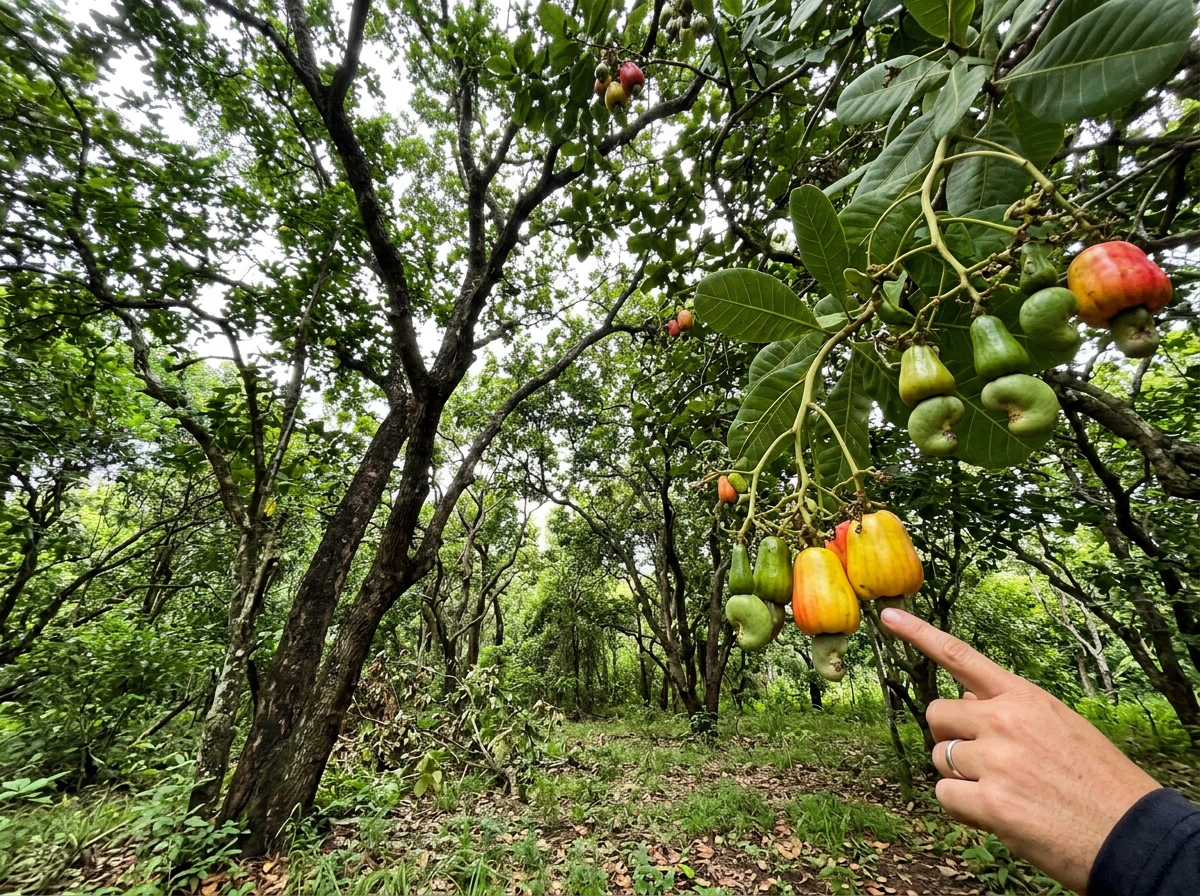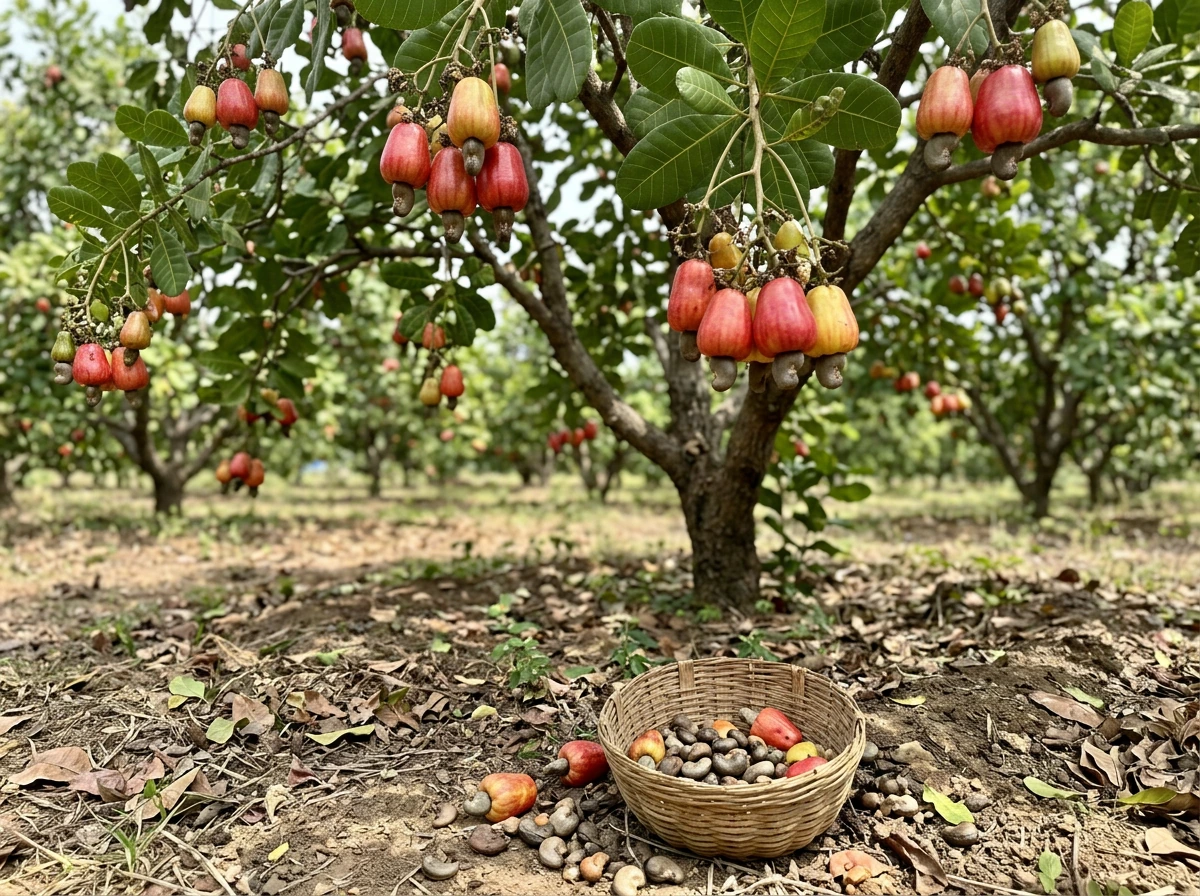
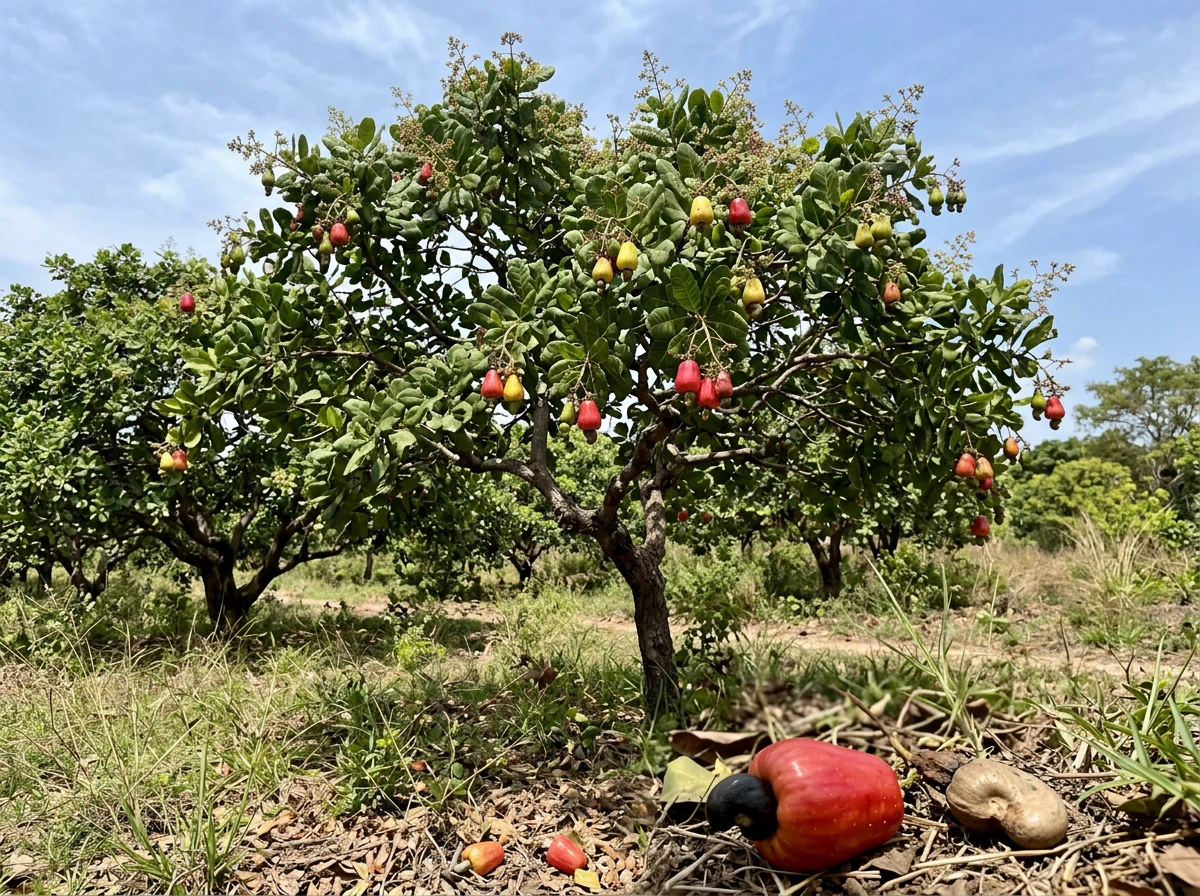
The cashew nut grows at the end of a fleshy, pear-shaped fruit called the cashew apple, hanging off the tree like a small pendant. [how many cashews grow on a tree](/growing-cashews/how-many-cashews-grow-on-a-tree) That might already sound strange, and it gets stranger: the part most people think of as the fruit (the apple) is technically a swollen flower stalk, and the part most people think of as a seed (the nut) is actually the true fruit. If you want to grow cashews, or you just want to understand what's going on with this unusual plant, that biology is the starting point for everything else. If you’re wondering whether cashews grow on apples, that’s not quite right, cashews grow at the end of the cashew apple. do cashews grow in a shell
How Does Cashew Nut Grow Step-by-Step and Cultivation Guide
What the cashew tree actually is and where the nut comes from
Cashew (Anacardium occidentale) is a tropical tree in the same family as mangoes and pistachios. In good conditions it grows into a spreading, evergreen tree reaching 10 to 12 meters tall, though dwarf varieties used in commercial and home planting stay much shorter and more manageable. The tree originates from northeastern Brazil and is now cultivated across the tropics. West Africa is currently the world's leading production region, accounting for roughly 54% of global raw cashew nut production in 2022/23, followed by Vietnam, India, and other parts of tropical Asia and Latin America.
Here is how the nut actually forms. The cashew tree produces small, pinkish-white flowers in large panicles (branching clusters) at the tips of its branches. After a flower is fertilized, a kidney-shaped true fruit develops. That true fruit is a hard-shelled drupe, and the edible kernel inside it is what we buy as a cashew nut. Simultaneously, the flower stalk (peduncle) swells dramatically into the fleshy, oval cashew apple you sometimes see in photos. So the cashew apple is a pseudofruit, a botanical impostor built from the stalk rather than the ovary, and the actual nut hangs off its bottom tip. This anatomy is why cashews are never sold in a traditional fruit shell the way almonds or walnuts are: the shell is the outer wall of the true fruit, and it contains caustic oils (urushiol-related compounds) that require careful processing before the kernel is safe to eat.
From a timing standpoint, the nut reaches close to its maximum size in about 30 days after fertilization. From a timing standpoint, the nut reaches close to its maximum size in about 30 days after fertilization. Full nut maturity takes roughly 50 to 60 days from flowering, and then the cashew apple (the pseudofruit) matures over another 20 to 30 days., and then the cashew apple (the pseudofruit) matures over another 20 to 30 days. Terminal flowers on a panicle open before lateral ones, so not every flower sets fruit at the same moment, and flowering itself can stretch over a 30 to 60 day period. The whole process from first flower to ripe nut and apple is slower and more staggered than most people expect.
Where cashews actually grow: climate and regional fit
Cashew is strictly a tropical tree. It needs frost-free conditions, full sun, and a pronounced dry season to flower and fruit reliably. In the United States, that limits outdoor cultivation to extreme southern Florida, Hawaii, and Puerto Rico. Anywhere that sees winter frost is off the table, and even a light freeze can damage or kill the tree. If you are not in one of those zones, cashew does not work as an outdoor tree, full stop.
The temperature sweet spot for cashew is roughly 19 to 34°C (66 to 93°F), and fruit development performs best between 18 and 35°C. The tree may fail to flower and fruit altogether if average lows in the coldest month drop below 11°C (52°F). Annual rainfall requirements are fairly broad: cashew can survive in areas receiving as little as 500 mm per year when established, and up to 3,500 mm or more in some reports, but practical production targets a range closer to 1,000 to 2,000 mm. In Hawaii specifically, preferred rainfall falls around 39 to 79 inches (roughly 1,000 to 2,000 mm).
The dry season is critical and often misunderstood. Cashew needs a distinct dry period of 3 to 7 months to trigger flowering. Areas with evenly distributed rainfall year-round can suppress flowering, and too much rain during flowering and fruit set creates serious disease pressure, especially anthracnose. This is why cashew thrives in regions like northern Brazil, the West African savanna belt, coastal India, and parts of Southeast Asia that have predictable wet and dry seasons rather than year-round humidity.
Starting a cashew tree: seed vs. grafted plants
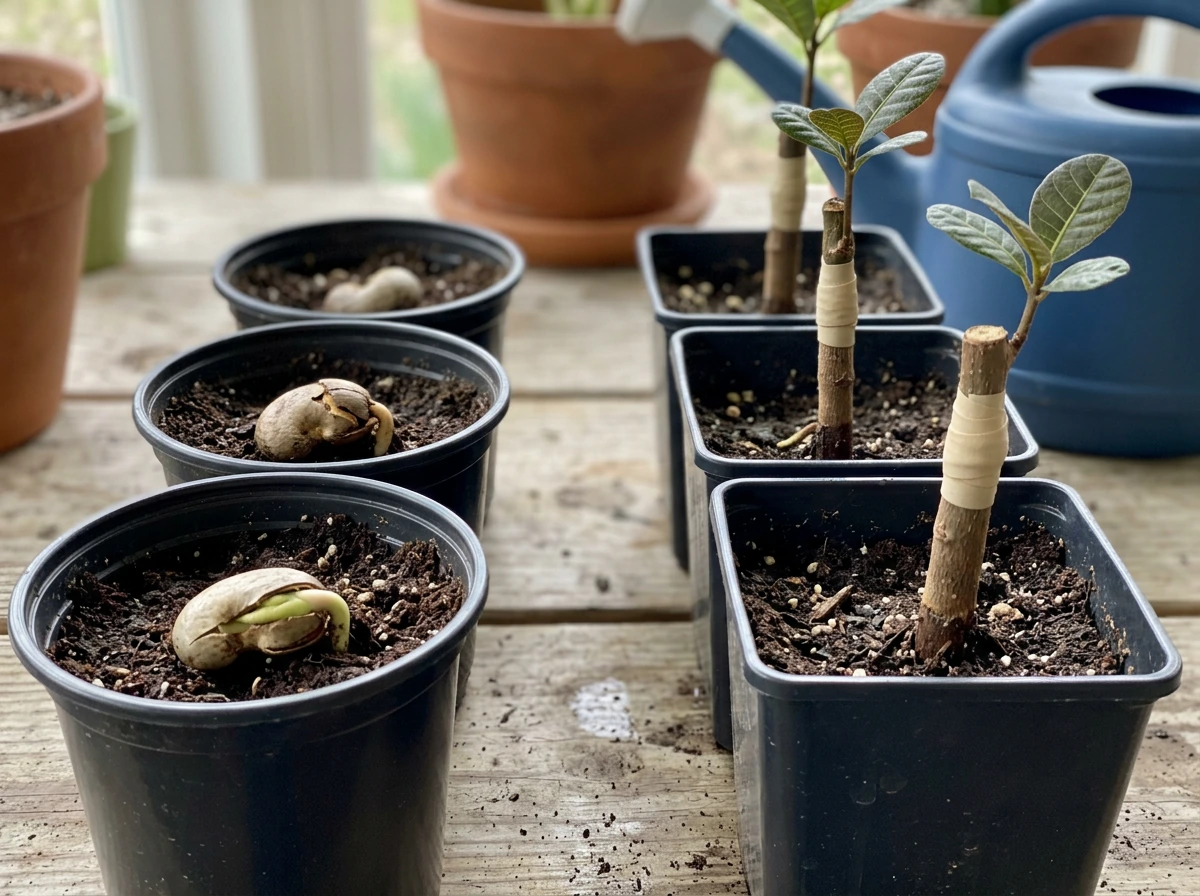
You have two realistic options for starting a cashew tree: growing from seed or planting a grafted sapling. Each has real tradeoffs worth understanding before you commit.
Growing from seed
Cashew seeds are the raw, unroasted nuts in their shell. You cannot germinate a roasted or processed cashew. The seed should be fresh, viable, and ideally sourced from a reputable supplier in a cashew-growing region. Sow the seed directly in the ground or in a deep container (cashew develops a long taproot early on) at about 2 to 5 cm depth, with the hilum (the small scar on the seed) pointing sideways or slightly downward. Keep the soil moist but not waterlogged. Under good conditions, germination typically occurs in about 15 to 20 days, though experimental studies have shown some varieties taking 26 to 33 days depending on seed source and substrate conditions.
The downside of seed-grown trees is time and variability. Seedling trees tend to be larger and less uniform than grafted types, they typically take longer to fruit, and you have no guarantee of the productivity or quality of the tree you end up with. For a casual grower or someone exploring cashew out of curiosity, seed is perfectly fine. For anyone serious about production, grafted trees are the better choice.
Grafted trees
Grafted cashew trees use a selected, high-performing variety (scion) joined to a vigorous rootstock. The main advantage is earliness: dwarf or precocious grafted varieties can begin flowering and fruiting in as little as their second or third year from planting, while seedling trees of the larger "giant" or "tardio" types typically do not flower until year three or later, and may take significantly longer to reach reliable production. If you have access to a grafted dwarf variety through a nursery in southern Florida, Hawaii, or Puerto Rico, that is almost always the smarter starting point.
Soil, sun, water, and fertilizer: what the tree actually needs
Soil
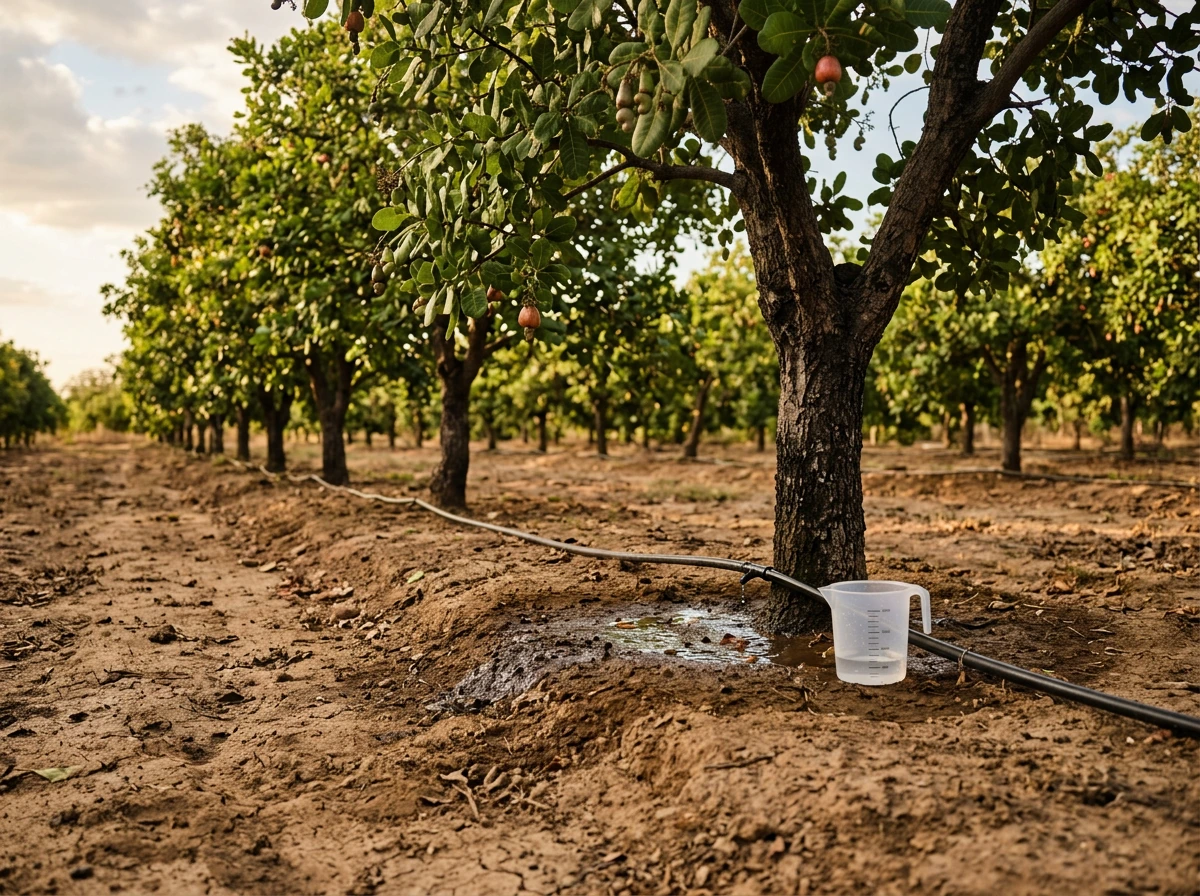
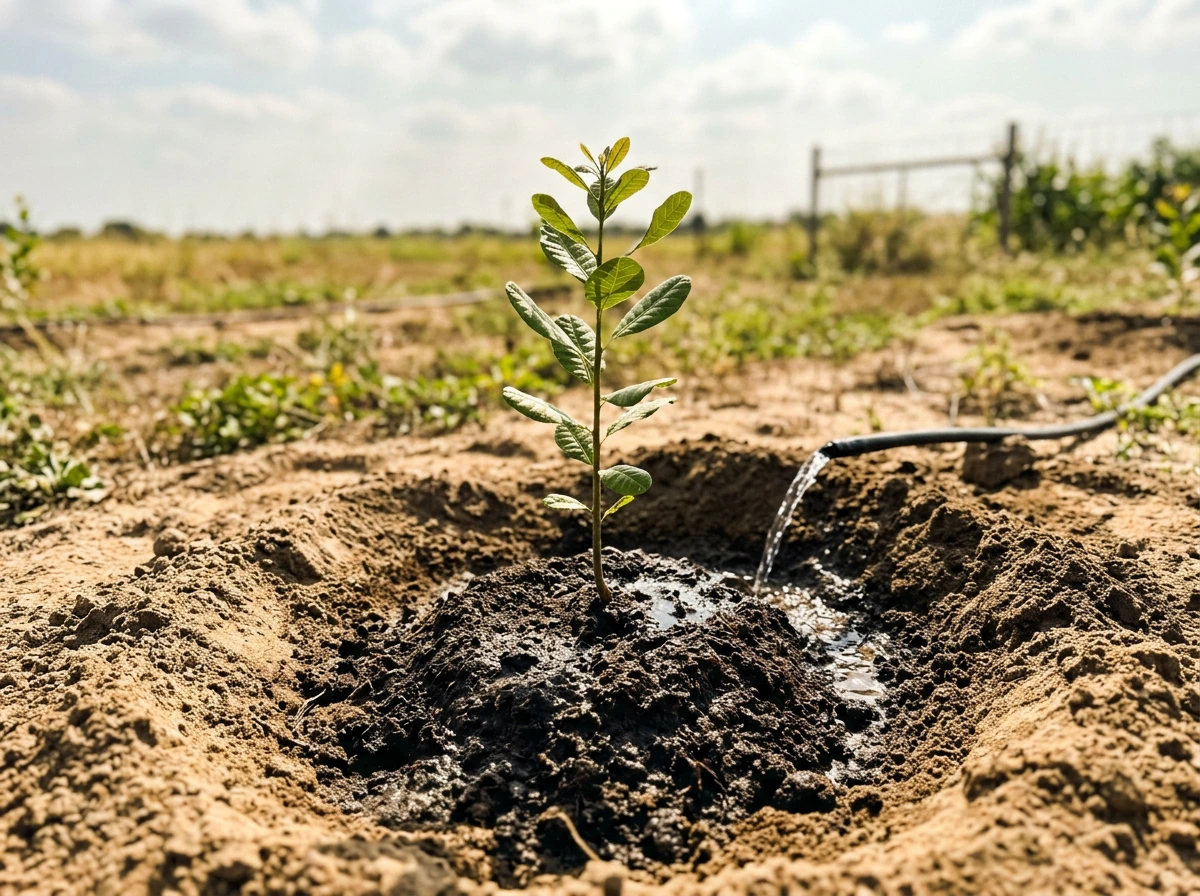
Cashew is tolerant of poor, sandy soils to a degree that most fruit trees are not, which is actually one reason it has spread through the tropics so readily. It does not tolerate waterlogged or heavy clay soils. Drainage is non-negotiable: standing water around the roots will cause root rot and kill the tree. Slightly acidic to neutral soil (pH roughly 5.5 to 7.0) is preferred. If you are planting in Florida or Hawaii, test your soil drainage before you plant by digging a hole and watching how quickly water drains away. Poor drainage should be corrected with raised beds or mounded planting rather than ignored.
Sun
Cashew needs full sun, at least 6 to 8 hours of direct sunlight per day, and more is better. It is a tree that evolved in open tropical landscapes with high light intensity. Shading from buildings, other trees, or dense vegetation will reduce flowering and fruit set. Choose the most open, sun-exposed spot available.
Watering
Young cashew trees need consistent moisture during establishment, which typically covers the first one to two years in the ground. Once established, cashew is genuinely drought-tolerant and does not need heavy irrigation. However, optimal production is not the same as survival. Trees that go through a proper dry season followed by good soil moisture availability as flowering begins tend to fruit more reliably. Avoid overhead irrigation during flowering, as wet conditions at that stage promote the fungal diseases (particularly anthracnose) that can devastate a crop. Water demand during the dry establishment period is moderate, but the water footprint of cashew production is a topic worth exploring separately alongside other nut crops, like how much water does it take to grow a cashew. what nut takes the most water to grow
Fertilization
Young cashew trees benefit from balanced fertilization during the first few years to support establishment and canopy development. A nitrogen-phosphorus-potassium blend (such as 10-10-10 or similar) applied two to three times per year during the active growing season is a reasonable starting point. As the tree matures and moves into fruiting, reduce nitrogen slightly relative to phosphorus and potassium to encourage flowering over vegetative growth. Avoid heavy fertilization right before or during the dry season when you want the tree to harden off before it flowers. Organic amendments like compost work well as a soil conditioner alongside any mineral fertilizer program.
Year-round care: pruning, flowering, fruiting, and watching for problems
Pruning and shaping
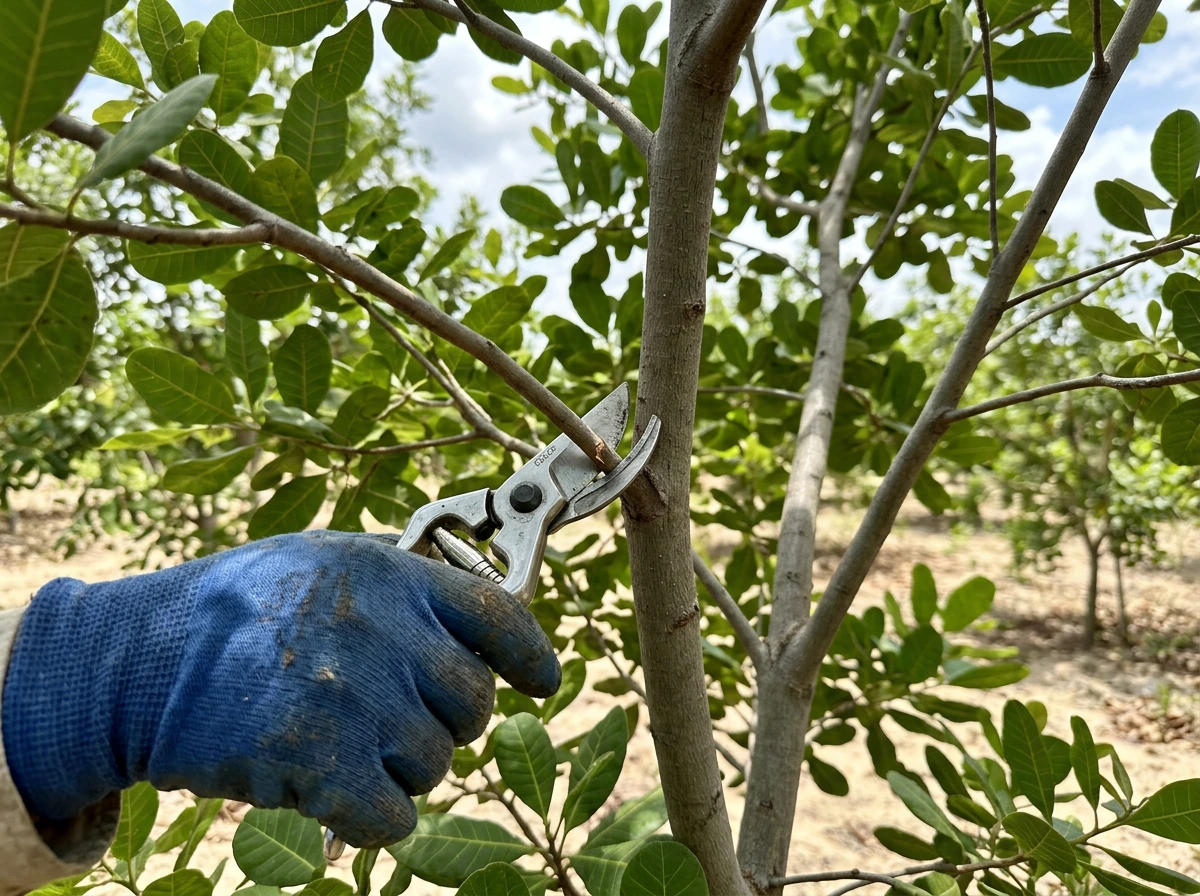
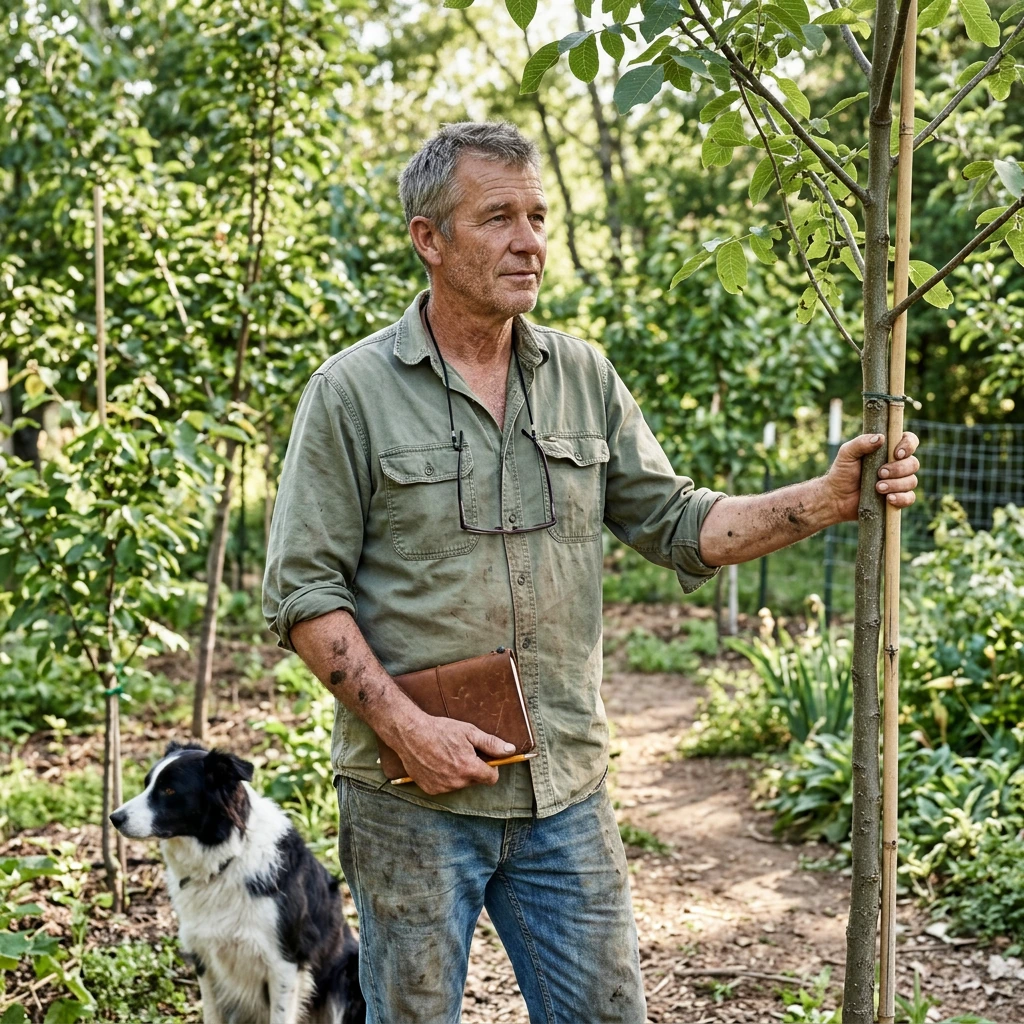
Cashew trees benefit from light pruning during their early years to build a strong, open canopy structure. Remove crossing or crowded branches and aim for a shape that allows light to penetrate into the interior of the tree. Heavy pruning is generally not needed or recommended on mature trees, but removing dead wood, damaged branches, and any growth showing disease symptoms should be done promptly. The best time to prune is after harvest, before the next dry season begins.
Flowering and fruiting
Cashew typically flowers near the end of the dry season or as rains begin, though this varies by location. Flowering can occur over a 30 to 60 day window. Watch for panicle emergence at the branch tips. Once you see flowers opening, the countdown to nut maturity begins: approximately 50 to 60 days to ripe nut, with the cashew apple maturing over the following 20 to 30 days. Avoid any practices that introduce excess moisture to the canopy during this window.
Key pests and diseases to watch
You do not need an agrochemistry degree to grow a cashew tree in a home garden, but you do need to recognize the two or three problems that cause most of the damage. Anthracnose (caused by Colletotrichum gloeosporioides) is the most widespread fungal disease, especially during wet periods. It shows up as water-soaked lesions on tender leaves and twigs that can lead to dieback. It is most damaging when wet weather coincides with the flowering period. The Tea Mosquito Bug and the Cashew Stem and Root Borer are the pest species most commonly flagged as serious threats, with damage often concentrated around flowering and fruiting. Inspect the tree regularly during those stages. Early identification and targeted intervention (physical removal, appropriate organic or chemical controls depending on your approach) prevents small problems from becoming major ones.
Cashew growth timeline: what to expect year by year
Here is a realistic sequence of what you should expect from planting through first harvest, whether you are starting from seed or a grafted sapling.
| Stage | Approximate Timing | What to Look For |
|---|---|---|
| Germination (seed start) | 15 to 33 days after sowing | Shoot emergence; first leaves unfurling |
| Seedling establishment | Months 1 to 6 | Rapid taproot development; broad juvenile leaves; sensitive to waterlogging |
| Young tree growth | Year 1 to 2 | Canopy spreading; branches developing; minimal pruning to shape structure |
| First flowering (grafted dwarf) | Year 2 to 3 | Panicles emerging at branch tips; small pinkish-white flowers opening progressively |
| First flowering (seedling/giant type) | Year 3 or later | Same signs, but later onset; some trees take 4 to 5 years |
| Nut development | 50 to 60 days after flowering | Kidney-shaped nut visible at tip of swelling peduncle; green to grey-brown coloration |
| Cashew apple maturity | 70 to 90 days after flowering | Apple turns yellow, orange, or red depending on variety; nut shell dry and complete |
| Reliable annual production | Year 3 to 5 onward | Consistent flowering and cropping each season with good canopy and dry-season timing |
One thing that trips people up is the gap between flowering and harvest. The 50 to 60 day nut development window feels long, and the staggered nature of flowering (terminal flowers first, lateral flowers following) means nuts on the same tree do not all ripen at the same time. You will be harvesting over a period of weeks rather than a single moment.
Using photos, videos, and time-lapse to actually see how cashew grows
If you want to understand cashew growth visually, there is genuinely useful material available, but knowing what to search for makes the difference between finding helpful content and getting lost. Here is a practical guide to what different visual formats show and what to specifically look for.
What good images should show
- The full tree canopy and branching structure so you can gauge spacing and habit
- Close-up of a panicle with open flowers to understand flowering timing and scale
- A nut in early development alongside a just-beginning pseudofruit so you see the relationship between the two structures
- A mature cashew apple with the nut hanging at its base (this is the most clarifying single image for understanding cashew anatomy)
- Cross-section images showing the layers of the cashew shell (mesocarp containing the caustic oil) and the kernel inside
- Comparison of dwarf vs. giant variety tree size and canopy spread
What to look for in videos and YouTube content
Search YouTube for terms like "cashew tree flowering" and "cashew nut development" to find footage from Indian agricultural extension channels, Brazilian farming content, and home growers in Hawaii or Florida. The most useful videos for understanding the growth process will show: panicle emergence and flowering in real time, the transition from flower to developing nut (watch for the tiny nut forming before the apple has expanded much), and harvest-ready trees where the apple is brightly colored and the nut shell is grey-brown and firm. Look specifically for videos that label or narrate the developmental stages, since raw footage without explanation can be hard to interpret for the first-time grower.
Time-lapse content: what it actually shows
Time-lapse footage of cashew development is less common than for faster-growing plants, but some agricultural research institutions and documentaries have produced it. A useful cashew time-lapse will compress the 50 to 90 day arc from fertilized flower to mature apple into a watchable sequence. What you want to see specifically: the nut reaching close to its maximum size in the first 30 days (it grows faster early on), then the pseudofruit peduncle beginning to swell noticeably around the 30 to 40 day mark, and finally both structures plumping and coloring as they approach maturity. The nut stops growing in size before it is fully mature, so size alone is not the harvest signal. Color change in the apple and hardening of the nut shell are better indicators.
How to find reliable visual resources
- Search YouTube with terms like "cashew flowering to harvest," "cashew apple development," or "Anacardium occidentale growth" for botanical content
- University extension channels from Florida, Hawaii, or India often post well-labeled cashew footage
- Search Google Images for "cashew nut drupe development" or "cashew apple stages" for botanical diagrams and field photographs that label structures accurately
- Agricultural documentary platforms and FAO visual resources often have high-quality footage of commercial cashew growing in West Africa and India
- For germination visuals, search "cashew seed germination time-lapse" or "Anacardium occidentale germination"
Realistic expectations and your next step
Cashew is not a difficult tree to grow if you are in the right climate. It tolerates poor soils, handles drought once established, and does not need intensive management in a home garden. What it absolutely will not tolerate is frost, waterlogged soil, or year-round humidity without a dry season. Those three things will prevent flowering and fruiting reliably, and no amount of extra care compensates for them.
If you are in southern Florida, Hawaii, or Puerto Rico and you have a full-sun spot with decent drainage, you can realistically grow a cashew tree and expect fruit within two to three years from a grafted dwarf variety. If you are in a subtropical climate that gets the occasional cold snap, cashew is probably not your tree. For those readers, the biology and process described here still applies: understanding how cashew nuts actually form, from fertilized flower through nut and apple development, is useful context whether you ever plant one or not.
If you want to go deeper on specific aspects of the cashew growing journey, timing to first harvest, water requirements relative to other nut crops, or how to think about nut yield per tree are all topics worth exploring as you plan. The cashew tree rewards patience and correct climate matching above almost any other factor.
FAQ
Why does my cashew tree bloom but not form nuts (or form very few)?
Bloom without good fruit set usually means the flowering conditions were off, even if the tree looks healthy. The most common culprits are insufficient dry period (no clear dry season to trigger flowering), cold stress around the critical weeks near flowering lows below about 11°C (52°F), or heavy, continuous rain during flowering that both reduces successful pollination and increases fungal disease pressure.
Can cashew self-pollinate, or do I need more than one tree?
Cashew can set fruit without you arranging a special pollination system, but good flowering and weather still matter. If you are in a spot with lots of rain during bloom or frequent canopy shade, you can end up with flowers but poor fruiting. For home planting, having more than one tree can improve the odds, but climate and dry-season timing still dominate results.
How can I tell when the cashew apple is ready, versus when the nut inside is ready?
The cashew apple’s bright color is a useful harvest signal, but the nut maturity depends on development timing and shell hardening. Don’t judge by nut size alone, because the nut stops growing before it is fully mature. In practice, harvest when the apple is distinctly colored and the nut shell is grey-brown and firm, even though nuts on one tree ripen over weeks.
Is it safe to eat a cashew you grew yourself straight from the tree?
No. The shell of the true fruit contains caustic oils and compounds that require proper processing before the kernel is safe to eat. Home processing is risky without experience and equipment, so it’s best to stick to buying processed kernels or learning from a reliable, safe roasting or chemical-removal workflow before attempting shell removal and cooking.
What’s the best container depth and setup if I want to grow cashew in a pot?
Plan for a deep container because the early taproot is long. A deep, well-draining pot plus a fast-draining mix is essential, and you still need to manage frost risk, heat, and light. If the taproot becomes constrained, flowering can be delayed or the tree can stall, so most people transition to in-ground planting as soon as climate allows.
How often should I water a young cashew, and what should I stop doing before flowering?
During the first one to two years, keep moisture consistent enough to establish roots, but avoid waterlogged soil. Before the dry-season trigger, reduce water so the tree can harden off, because excess rain or irrigation right before and during flowering increases disease risk, especially anthracnose, and can suppress fruiting.
Do I need to fertilize year-round for cashew, or just during growth?
Use fertilizer primarily during active growth to build canopy and support establishment, then ease back as the dry season approaches. Heavy nitrogen just before or during the dry season can push vegetative growth and reduce flowering. A balanced approach early (for example, an N-P-K mix), then slightly lower nitrogen relative to phosphorus and potassium as fruiting begins, helps keep the tree on track.
What pruning mistakes most often reduce cashew yield?
Over-pruning or forcing a very dense canopy reduces light penetration, which can lower flowering and fruit set. Another common mistake is pruning at the wrong time and leaving wounds to stay wet in humid periods, which can invite disease. Aim for light, structural pruning early, and remove dead or diseased wood promptly, ideally after harvest and before the next dry season begins.
Which pests and diseases should I watch for first, and when should I inspect the most?
Inspect most intensely around flowering and fruiting, because several serious issues flare during wet conditions then. Start with early detection of anthracnose, which often begins as water-soaked lesions on tender leaves and twigs and can progress to dieback. For pests, focus on signs concentrated near stems and roots during reproductive stages, since borer activity is often most noticeable then.
Can cashew grow in a subtropical area with occasional cold snaps indoors or in a greenhouse?
In a greenhouse, you may protect the tree from frost, but cashew still requires a true dry season to reliably trigger flowering. If your setup keeps humidity and soil moisture high year-round, the tree may stay vegetative. If you can create both frost-free temperatures and a controlled dry period with full sun, indoor or protected cultivation becomes more feasible.
How long will it take to get your first harvest, and what affects the timing most?
The timeline depends heavily on whether you use grafted dwarf varieties or seed-grown trees, and on whether your climate matches the dry-season and temperature needs. In ideal warm, frost-free conditions, grafted dwarf trees can start fruiting around the second or third year. Seedling trees typically take longer and vary more, so expect a bigger spread in when fruit appears.