The short answer: pecans are almost certainly the thirstiest nut you can grow, needing roughly 60 inches of water per year to maximize a crop. That is more than most other nut trees by a meaningful margin, and a significant chunk of that demand has to come from irrigation in most growing regions because rainfall rarely covers it. But "most water" is not a single number you can apply everywhere, and understanding what that figure actually means is what separates a productive orchard from a stressed or waterlogged one.
What Nut Takes the Most Water to Grow and Why
Marcus Hendricks
24 Mar 2026
What "most water" actually means for nut trees
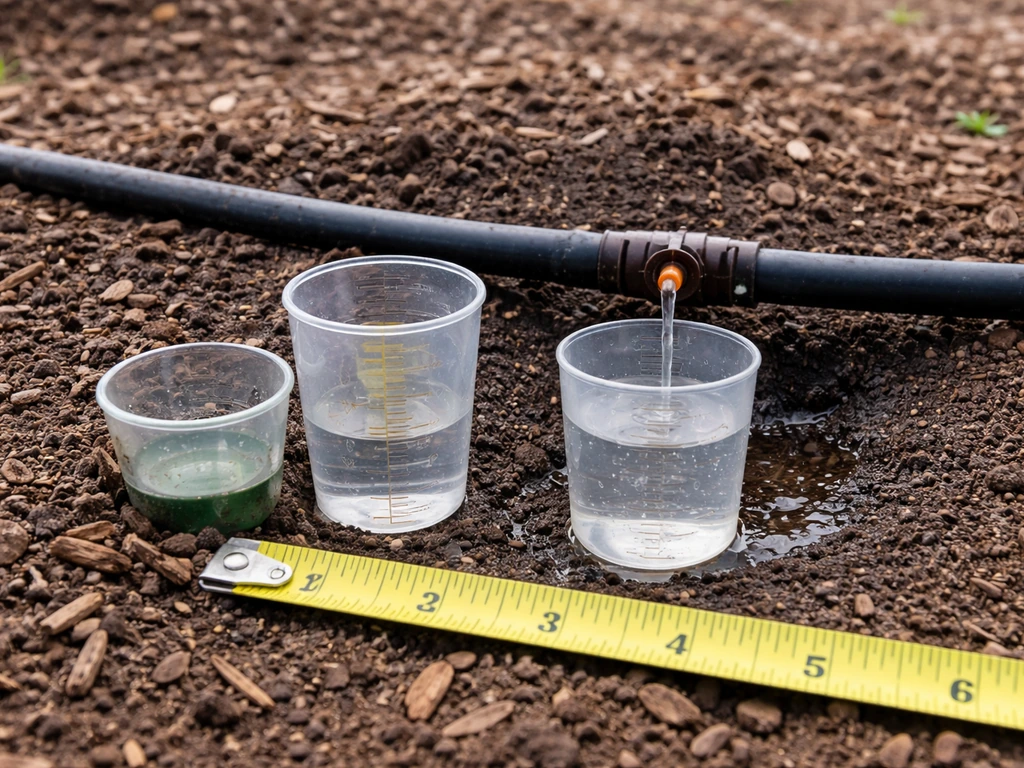
When people ask which nut takes the most water, they usually picture a daily irrigation volume. But the more useful way to think about it is crop evapotranspiration, written as ETc. The formula agronomists use is ETc = Kc × ETo, where ETo is the reference evapotranspiration for your location and Kc is a crop coefficient specific to the nut tree species. Kc is just a dimensionless multiplier, often somewhere between 0.1 and 1.2 depending on the crop and its growth stage. This means a pecan or walnut in a hot, dry California valley has a higher absolute water demand than the same tree in a cooler, humid climate, even if the Kc is identical, because ETo is higher. So "most water" really has two parts: the species with the highest Kc, and the environment pushing ETo up. Both matter.
For practical purposes, total seasonal water demand and peak weekly demand during kernel fill are the two numbers worth tracking. A tree might have modest early-season needs but spike dramatically during nut sizing. That peak is where under-watering does the most damage and where over-watering mistakes also cluster.
The main contenders: nuts with genuinely high water needs
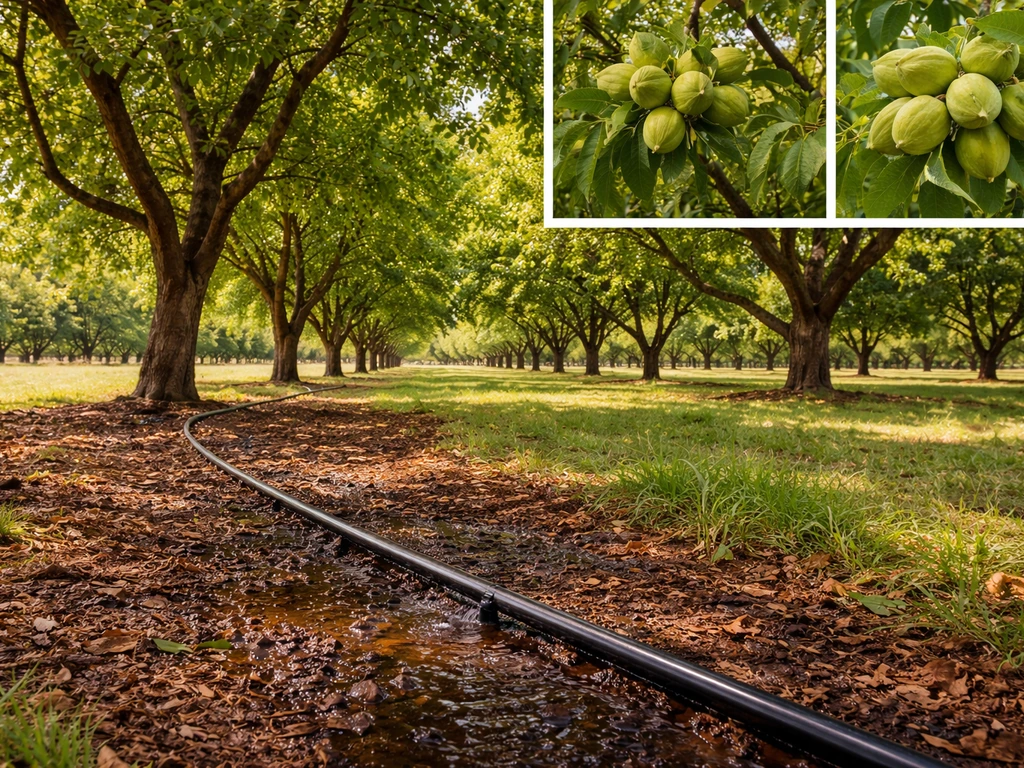
Pecans sit at the top. The UGA Extension puts their annual water requirement at around 60 inches to maximize yield, and in the Southeast, rainfall typically covers only about half of that. The rest has to come from irrigation or the trees simply underperform. Walnuts are close behind. Persian walnuts grown commercially in California require careful irrigation scheduling tied to soil water availability and ET, and they are sensitive to both water stress during hull split and to waterlogged roots at other times. Hazelnuts round out the high-water group, though for a different reason: their roots stay mostly within the top 2 feet of soil, so they depend on the surface layer staying consistently moist and are particularly vulnerable to both drying out and to waterlogging.
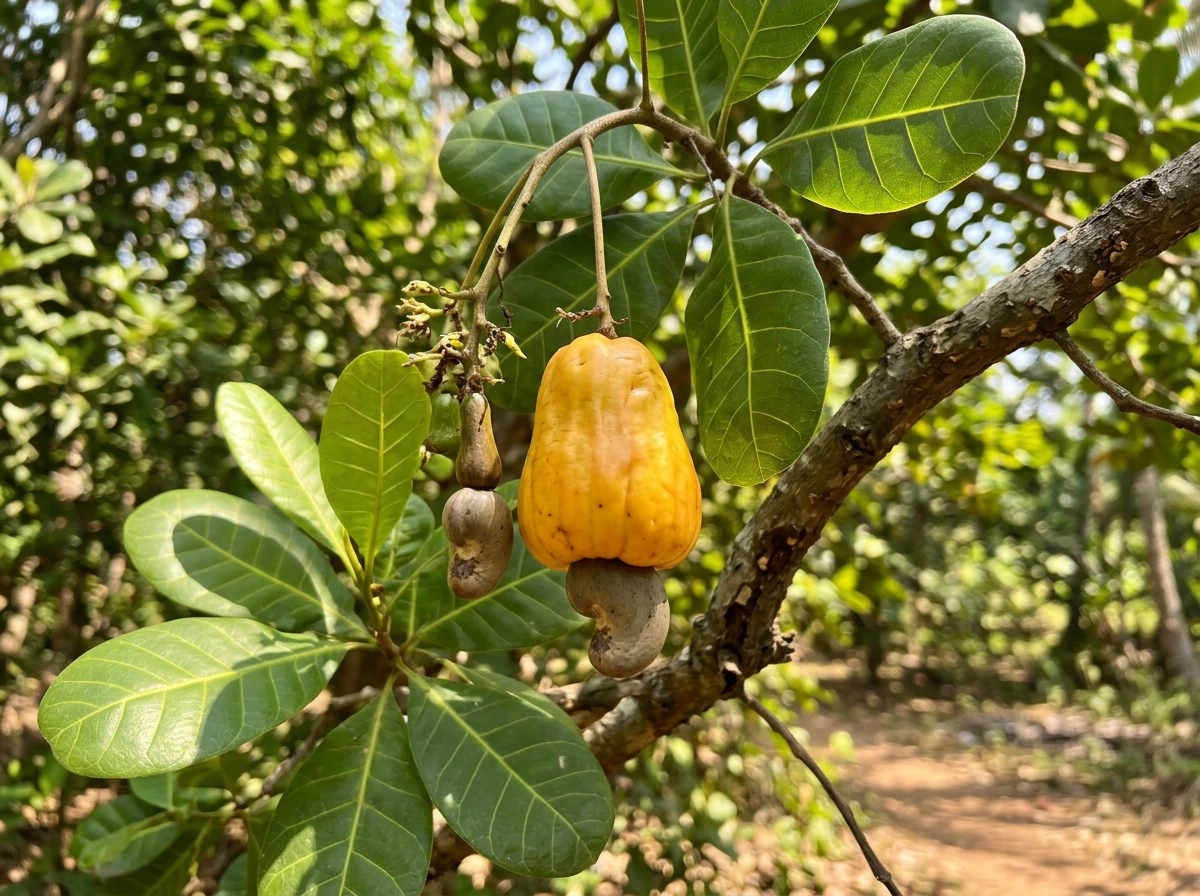
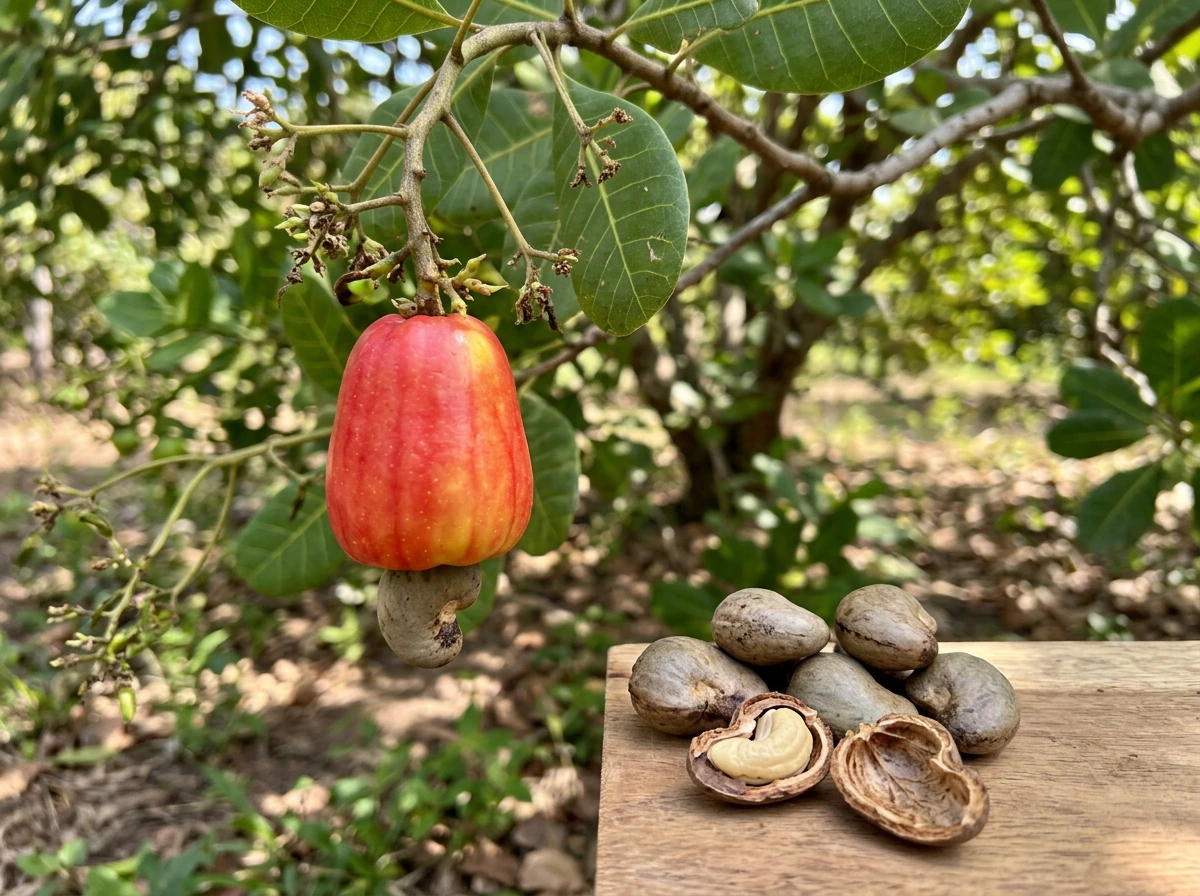
For comparison, almonds and pistachios are often grown under moderate to high irrigation in California, but they are notably more drought-tolerant once established. Cashews sit at the opposite extreme: once a cashew tree is four or more years old, supplemental irrigation is only beneficial during very prolonged dry spells. They actively dislike wet soils and should never be planted where flooding or poor drainage occurs. If you are researching cashews specifically, the details of how cashew grows, how does cashew nut grow (do cashews grow in a shell), including how many cashews grow on a tree and how it handles water stress are worth understanding separately, since cashew biology differs substantially from other nut trees. how many cashews grow on a tree
| Nut Tree | Approximate Annual Water Need | Drought Tolerance (Mature) | Waterlogging Risk |
|---|---|---|---|
| Pecan | ~60 inches/year | Moderate (needs consistent supply) | High in clay soils |
| Walnut (Persian) | High (ET-driven, soil-dependent) | Moderate | Moderate to high |
| Hazelnut | Moderate to high | Low to moderate | High (shallow roots) |
| Almond | Moderate | Moderate to good | Moderate |
| Pistachio | Moderate | Good | High in poorly drained soils |
| Cashew | Low (established trees) | Very good | Severe (avoid wet sites entirely) |
Recommendation: if you are trying to grow the highest-yielding, most water-demanding nut and you have the irrigation capacity and well-drained soil to support it, pecans are your benchmark species. Walnuts are a close alternative in cooler climates or higher elevations. Hazelnuts work in wetter regions but require careful drainage management. Cashews are not a high-water crop and should not be on this list at all for most growers.
Water needs change a lot depending on where the tree is in its life
The first summer is the most critical
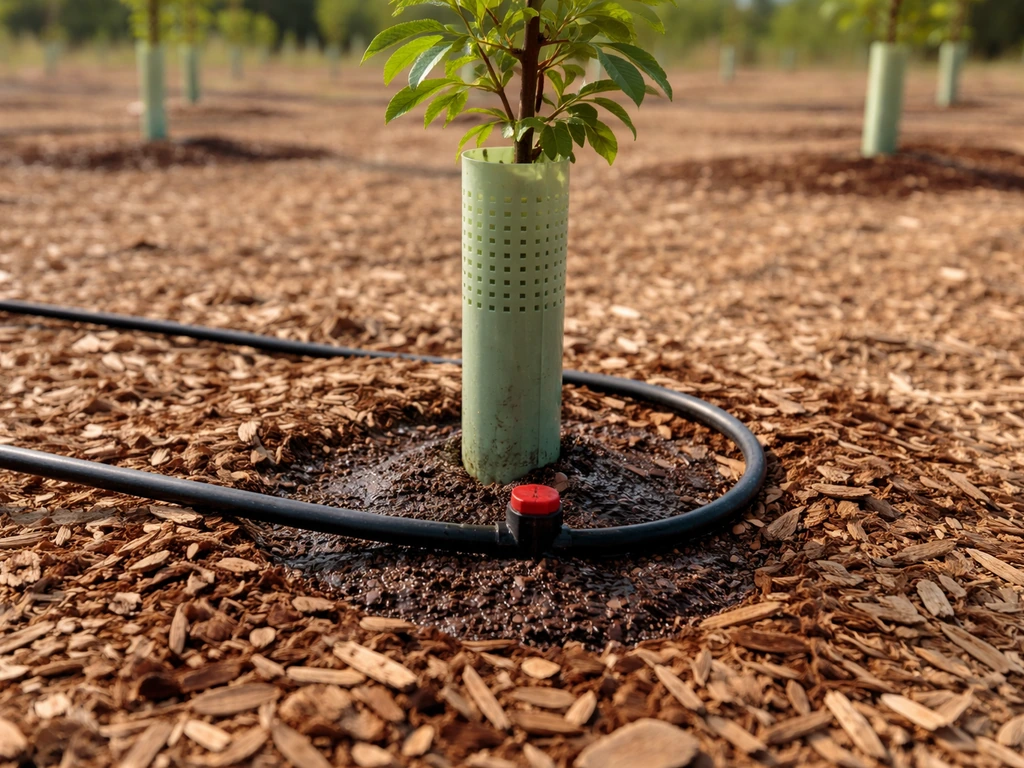
During the establishment phase, a young nut tree's root system is tiny relative to what it will eventually occupy. MSU Extension is direct about this for pecans: the first summer after planting is the most critical period, and the goal is to thoroughly wet the upper 6 to 8 inches of soil with a deep weekly soaking rather than frequent shallow sprinkles. Shallow frequent watering encourages roots to stay near the surface, which makes the tree more vulnerable later. You want roots chasing moisture down, not clustering at the top.
At this stage, absolute water volume is lower than for a mature tree, but the consequences of drying out are more severe. A mature pecan can handle a week of mild stress. A first-year tree in August heat can start showing decline in days.
Juvenile growth: building the root system
Years two through four or five are when the root system is expanding aggressively. Irrigation volume should increase gradually as the canopy and root zone grow. The goal is still to refill the root zone to field capacity, not to keep the soil perpetually saturated. A useful mental model from UMN Extension: think of the soil as a reservoir. Effective irrigation refills that reservoir up to field capacity. More water than that does not store in the roots, it just moves below the root zone or sits in poorly drained spots and causes oxygen stress.
Mature trees: peak demand during nut fill
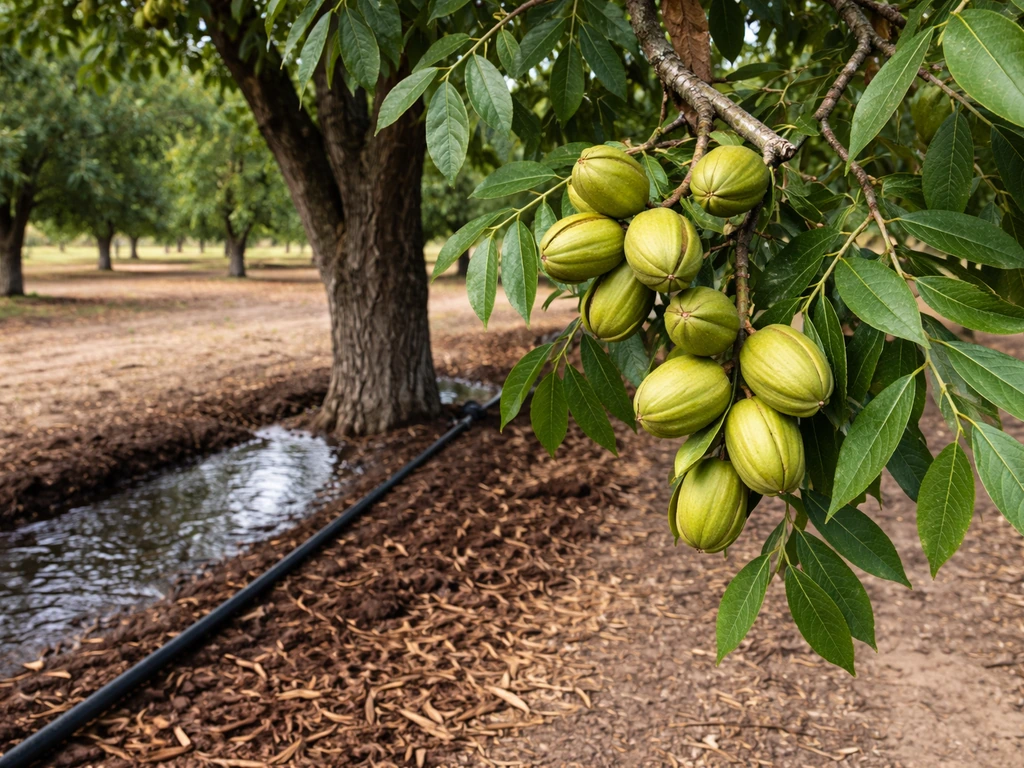
This is where pecans and walnuts really separate from other species. For pecans, UGA Extension identifies nut sizing and kernel filling in August and September as the peak water demand window. The first two weeks of September are particularly critical. At this stage, a mature pecan orchard in a hot region can consume water at rates that require substantial daily or near-daily irrigation to keep up with ET. Pecan roots extract most of their water from the upper 32 inches of the soil profile, so that depth is the zone you are managing. Running out of available water in that zone during kernel fill results in poor nut quality and reduced yield.
How to actually meet high water needs in your garden or orchard
Soil preparation comes first
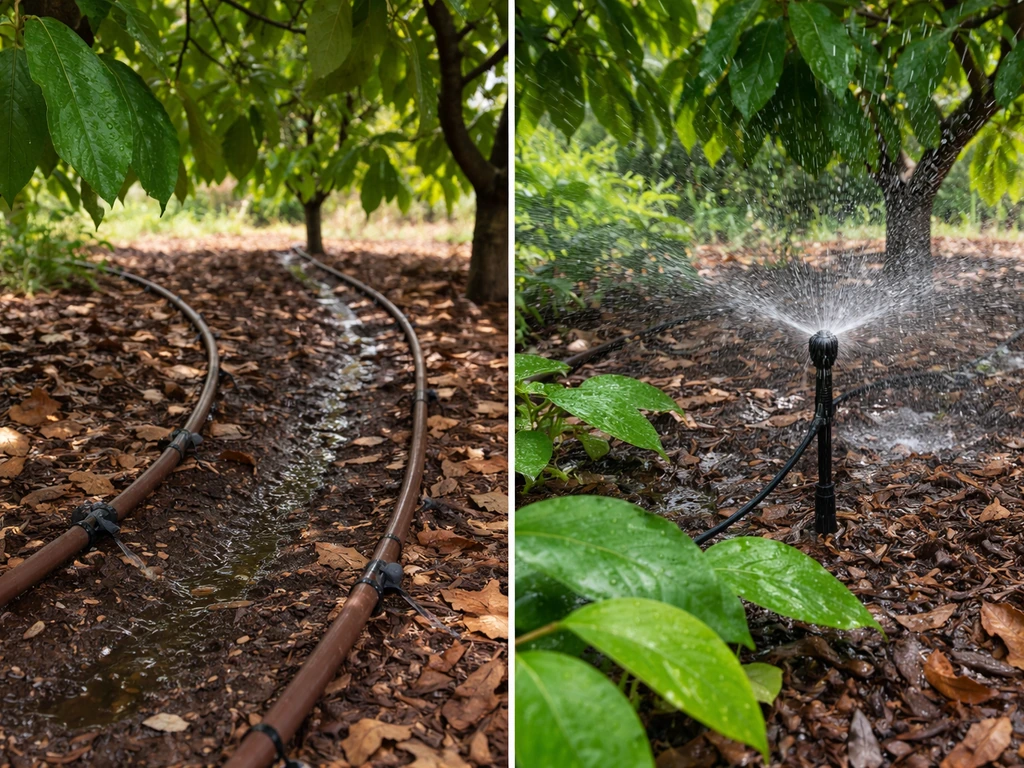
High water demand does not mean you want the soil holding water forever. You need soil that can absorb water quickly and hold a meaningful reserve without becoming anaerobic. Sandy loams are ideal for heavy-irrigation nut crops like pecans because they drain well enough to prevent waterlogging but still hold adequate moisture. Heavy clay soils are problematic: they retain more water but drain slowly, so they are prone to oxygen depletion during irrigation cycles. If you are on clay, amending with organic matter to improve structure and ensuring surface drainage channels exist is not optional, it is foundational.
Irrigation systems: drip versus overhead
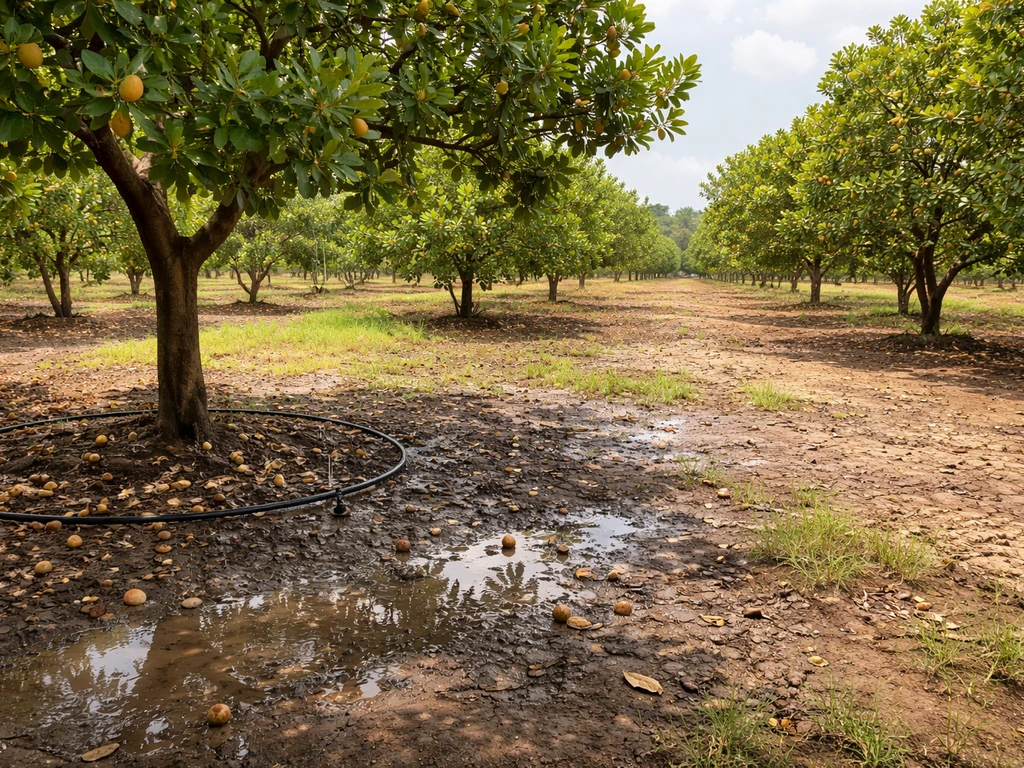
Drip irrigation is the most efficient method for high-water nut trees. For pecans specifically, UGA CAES drip irrigation guidance recommends placing soil moisture sensors about 12 to 15 inches from the nearest emitter and adjusting daily operating hours based on seasonal water consumption. The application time for each irrigation event should replace the water consumed since the previous irrigation, not a fixed daily schedule. This sounds obvious, but fixed-timer irrigation is one of the most common ways growers both over- and under-water depending on the season.
Micro-sprinklers or sprinklers work for smaller operations or home growers, but the key principle is the same: apply enough to refill the root zone, then stop. You want the top 30 to 32 inches wet for a mature pecan, the top 24 inches for hazelnut, and roughly the top 18 to 24 inches for young trees of any species.
Mulching: cheap and highly effective
A 3 to 4 inch layer of wood chip or bark mulch over the root zone meaningfully reduces evaporation from the soil surface, which is a significant part of overall water loss in hot weather. It also moderates soil temperature and suppresses weeds that compete for moisture. For young trees in particular, mulching within the drip line can reduce how often you need to irrigate while still maintaining adequate soil moisture.
Monitoring soil moisture practically
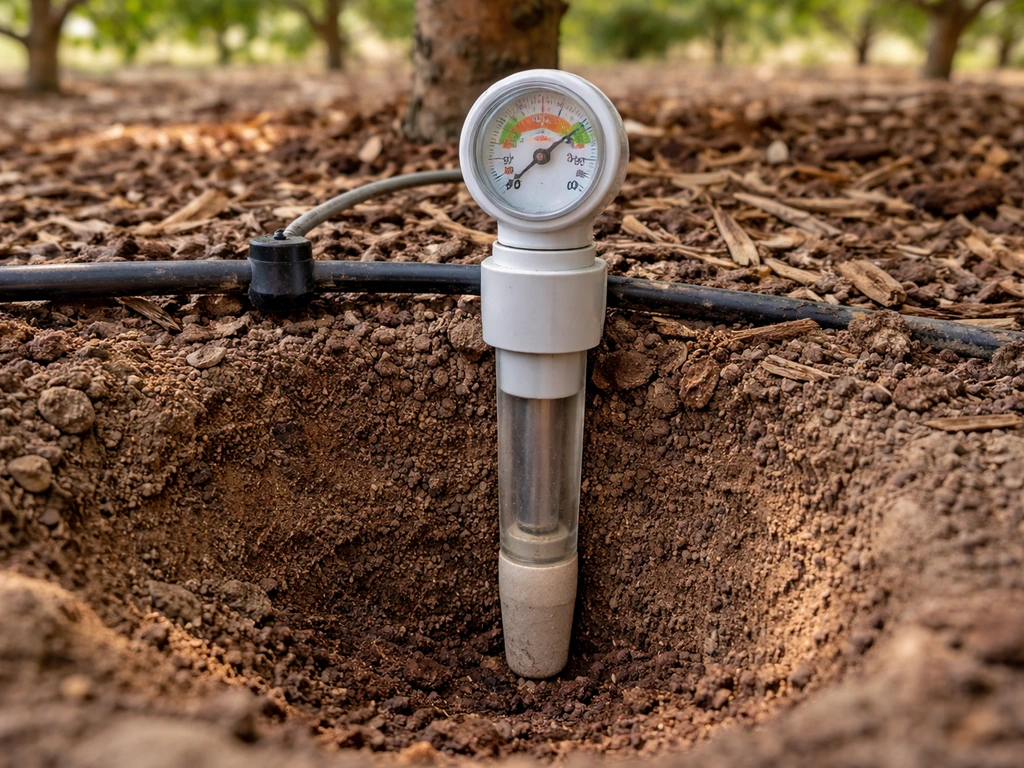
You do not need expensive equipment to monitor soil moisture effectively. Tensiometers are one of the most affordable reliable tools: NC State Extension describes them as a practical way to schedule irrigation, though they do need to be calibrated for your soil type to give meaningful readings. At a minimum, a soil probe or even a metal rod pushed into the ground gives you a rough sense of moisture depth. If it slides in easily for 12 inches, there is moisture. If it stops at 6 inches, the lower root zone is drying out. MSU Extension advises monitoring soil moisture at 6 to 10 inches below the surface, just above the primary root zone, as a practical early-warning indicator.
Where high-water nuts actually grow well: matching species to climate
Pecans are native to the American Southeast and South Central regions, particularly the Mississippi River valley and Texas. They thrive in USDA zones 6 through 9, where hot summers drive both high ET and the long warm seasons needed for nut fill. They need well-drained soils even as they demand high water volumes. Wet bottomlands or areas with seasonal flooding create serious problems: UGA Extension warns that flooding lasting several weeks can restrict root depth, increase root rot susceptibility, and cause long-term decline due to oxygen deprivation. The Texas Pecan Growers Association explicitly warns against placing orchards in boggy or swampy soils, even though pecans are often found near rivers in the wild. The key distinction is that natural riparian soils drain between flood events; permanently wet soils do not.
Walnuts perform best in zones 5 through 8, depending on variety, and are well-suited to California's Central Valley, the Pacific Northwest, and parts of the Midwest. They need deep, well-drained soils. Irrigation scheduling for walnuts is strongly tied to soil texture: clay soils hold more water per foot but restrict drainage, while sandy soils need more frequent applications because their water-holding capacity is lower. UC ANR's walnut irrigation guidance emphasizes that tree stress reflects orchard-specific soil water availability, not a universal daily target.
Hazelnuts are best suited to zones 4 through 8 and do particularly well in the Pacific Northwest, where the maritime climate provides consistent moisture. Because hazelnut roots stay shallow (mostly in the top 2 feet), they are more sensitive to surface soil drying in summer than deeper-rooted trees, but they are also more susceptible to Phytophthora root rot when soils stay saturated. OSU Extension notes that because waterlogged soils dry from the top down, the hazelnut rooting zone is affected more quickly than for deeper-rooted trees, which actually means drainage events can help them recover faster too. The risk of wet-soil Phytophthora infection is real in heavy or poorly drained Pacific Northwest soils and needs to be managed through site selection and controlled irrigation timing.
Mistakes that trip up growers dealing with high-water nut trees
- Confusing high water demand with waterlogging tolerance. A pecan or walnut needing 60 inches of annual water does not mean it can sit in saturated soil. Those 60 inches need to move through a well-drained root zone, not pool in it. Oxygen deprivation from waterlogging is one of the fastest ways to kill a nut tree regardless of species.
- Choosing the wrong site and assuming irrigation can compensate. If your soil drains poorly or has a shallow hardpan, no amount of irrigation management will fix the root environment. Site selection based on drainage capacity is more important than irrigation infrastructure.
- Running a fixed irrigation schedule year-round. Water demand is not constant. A pecan tree in March needs a fraction of what it needs in August. Fixed-timer systems that do not adjust for seasonal ET changes either under-water during peak demand or over-water in cooler months, both of which cause problems.
- Ignoring how heat and evaporation amplify demand. On a 100-degree day, ETo can be two to three times what it is on a mild spring day. Growers who irrigate based on calendar dates rather than actual ET or soil moisture checks routinely run into water stress during heat waves while thinking they are on schedule.
- Shallow, frequent watering on young trees. Frequent light irrigation keeps roots in the top few inches and creates dependency on surface moisture. This is fine until you have a dry week, and then the tree has no deep reserves to draw on. Deep, less-frequent irrigation trains roots to explore the full soil profile.
- Not accounting for soil type when interpreting moisture readings. A tensiometer or moisture probe reading means something different in sandy soil versus clay. Clay soil at the same reading holds much more available water. Calibrating your monitoring approach to your soil texture is not a detail, it is fundamental to making correct irrigation decisions.
Picking your species and getting started
If you are in zones 6 to 9 with deep, well-drained sandy loam or loamy soil, pecans are the highest-water, highest-reward option. Get your irrigation system in before you plant, not after. Drip with moisture monitoring is the right setup. Plan to manage two critical periods: the first summer after planting, and every August through September once the trees are in production.
If you are in the Pacific Northwest or a cooler zone with reliable rainfall but concern about wet winters, hazelnuts are more manageable but require careful drainage. Do not plant them in low spots. Raised beds or mounded rows help in heavy soils.
If you are in California or a similar Mediterranean climate with dry summers, walnuts are the practical high-water choice. The irrigation burden is significant, but the infrastructure and knowledge base for walnut irrigation in those regions is well-developed. Start with your local Cooperative Extension resources for Kc values and ETo data specific to your county, because those numbers vary enough to matter in scheduling decisions.
The one consistent next step regardless of species: dig a soil profile hole before you commit to a site. Go down at least 3 feet. Look for restrictive layers, standing water, mottled gray or orange coloring that signals seasonal saturation, and heavy clay. What you find there will tell you more about whether a high-water nut tree will succeed on your land than almost anything else.
FAQ
If pecans take about 60 inches of water per year, can I use 60 inches as a universal irrigation target?
Check the soil’s water-holding and drainage first, then target “refill to field capacity,” not a fixed inches-per-day number. A sandier soil needs more frequent shorter refills, while heavier soils need longer intervals with less total irrigation time to avoid anaerobic conditions around the roots.
When during the season should I worry most about under-watering pecans?
Look at effective root-zone depth and the tree’s phenology. Peak weekly demand is usually during kernel fill, but the exact timing shifts by variety, temperature, and whether trees are under stress. Use soil moisture or tensiometer readings to confirm you are maintaining available water during that window rather than relying only on calendar dates.
How can I tell the difference between over-watering and just having lots of water in the orchard?
A “wet” orchard can still be under-watered if water drains below the active rooting depth quickly. Conversely, you can over-water by keeping the root zone saturated even when there is enough total water in the irrigation event. The right test is whether moisture actually stays in the target depth range (for example, roughly the upper 32 inches for mature pecans) for long enough to support extraction.
Will mulching reduce irrigation needs so much that the “most water” ranking changes?
Use mulch and water properly, but also check emitter spacing, uniformity, and pressure regulation. Chips reduce evaporation, they do not prevent water deficits if the system delivers less than the crop evapotranspiration demand, especially during hot kernel fill months.
What’s the biggest mistake people make with irrigation scheduling for high-water nut trees?
For nuts that want more water, the “how long to run” should be recalculated after each irrigation based on soil moisture and ET demand since the last event. If you irrigate by a fixed schedule, you will miss seasonal swings and can end up both short in drought periods and excessive in cooler or rain-affected weeks.
If I have heavy clay soil, can I still grow pecans or walnuts, and how should my irrigation strategy change?
Start by verifying drainage, then only irrigate to the point the soil can absorb and store without staying saturated. In heavy clay, reduce how long you run each cycle, increase the number of cycles only if you can keep the root zone from remaining anaerobic, and ensure runoff paths exist so water does not pond near the trunk.
Why does the first summer after planting matter so much for water-demanding nuts?
Young trees have a tiny rooting volume, so they can show decline quickly even with modest absolute deficits. Use deeper, infrequent soakings early on, then gradually expand irrigation volume as the root system grows, watching that the upper soil layers do not dry between irrigations.
Do cashews ever need as much irrigation as pecans in extremely hot climates?
Not necessarily. Cashews dislike wet soils and flooding, but if you only consider “water need,” you might still assume they belong on a highest-water list. In practice, cashew suitability is about avoiding saturated conditions, so they usually require careful drainage and supplemental irrigation only during prolonged dry spells after establishment.
Where should soil moisture sensors be placed for drip irrigation so they actually help with scheduling?
Use sensors in the correct location relative to emitters (for example, in the zone the tree can actually extract water from). If sensors are placed too close or too deep, they can mislead your schedule, causing you to over-irrigate near emitters or under-irrigate farther out.
Are tensiometers or simple soil probes reliable without calibration?
Tensiometers and probes can work, but they need calibration to your soil texture. Without calibration, the same reading can correspond to different water availability in sandy loam versus clay, and you may trigger irrigation too early or too late.
What soil test or site check should I do before choosing a “high-water” nut orchard location?
Do a pre-plant soil profile check. Go down several feet, look for restrictive layers, seasonal saturation signs (mottling, gray or orange colors), and any hardpan that limits root penetration or drainage. This often predicts long-term waterlogging risk better than surface observations.
Can the answer to “what nut takes the most water” change depending on my region?
Yes, the ranking can shift by climate, because reference evapotranspiration changes with heat and humidity. A “thirstiest” nut in a hot valley can look less demanding in a cooler area, while a nut with shallow roots can become the most sensitive to drying even if its annual total is lower.
Which irrigation type is better, drip or sprinklers, for meeting a high-water nut tree’s needs?
Choose the irrigation method based on both efficiency and root-zone behavior. Drip generally provides better control for refilling the root zone without wasting water, while overhead sprinklers can be useful for smaller areas but can increase evaporative losses and make it harder to keep the target depth consistently moist.