Cashew nuts grow on tropical trees (Anacardium occidentale) that thrive in a narrow band of warm, frost-free climates, mostly between 25°N and 25°S of the equator. (Anacardium occidentale) that thrive in a narrow band of warm, frost-free climates, mostly between 25°N and 25°S of the equator. The leading producers today are Vietnam, India, Ivory Coast, and Brazil, but the tree is cultivated across much of sub-Saharan Africa, Southeast Asia, and parts of Central America. If you want a direct answer: cashews need reliably warm temperatures, a seasonal dry spell during flowering, and well-drained soil. cashew nuts grow in which soil They cannot survive frost. If your climate delivers those three things, you have a real shot at growing them. where do shea nuts grow
Where Does Cashew Nuts Grow Best Where They Grow Naturally
What the cashew nut actually is and what it grows on
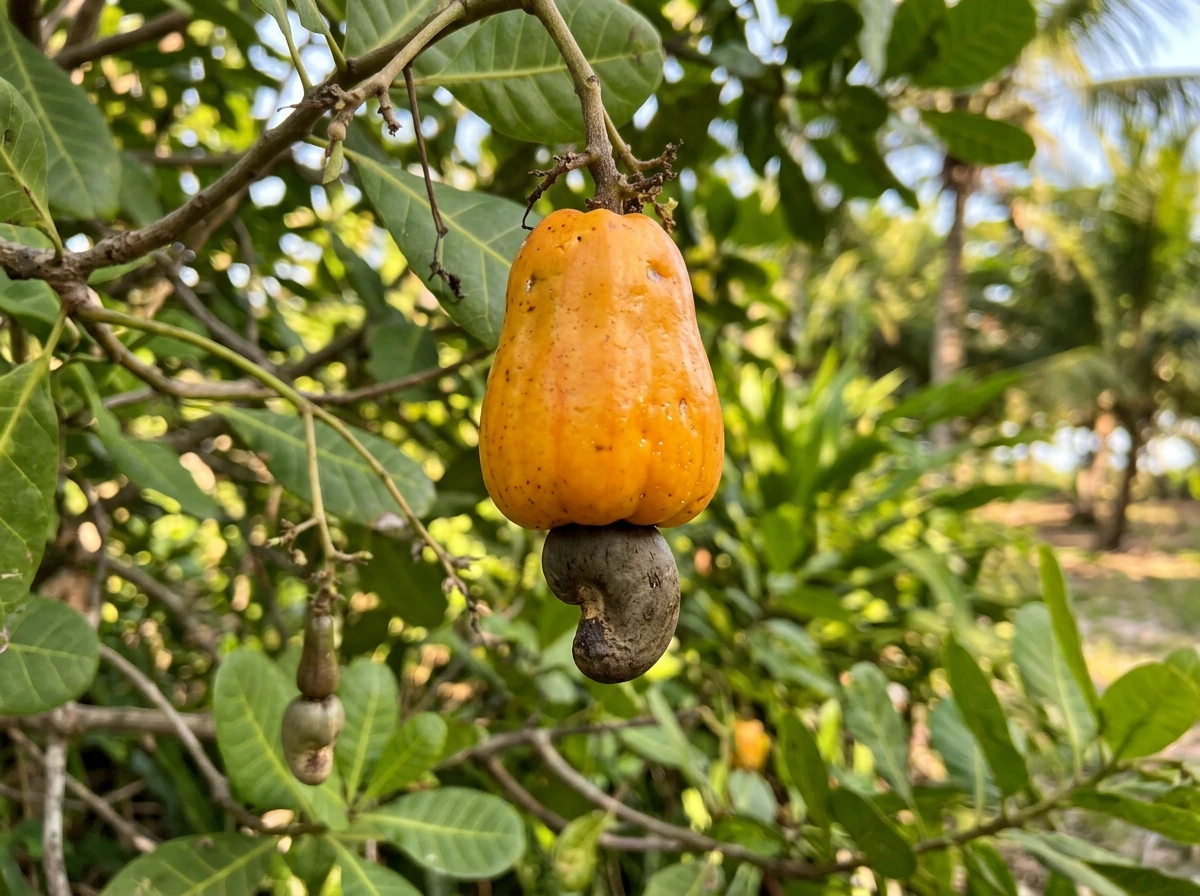
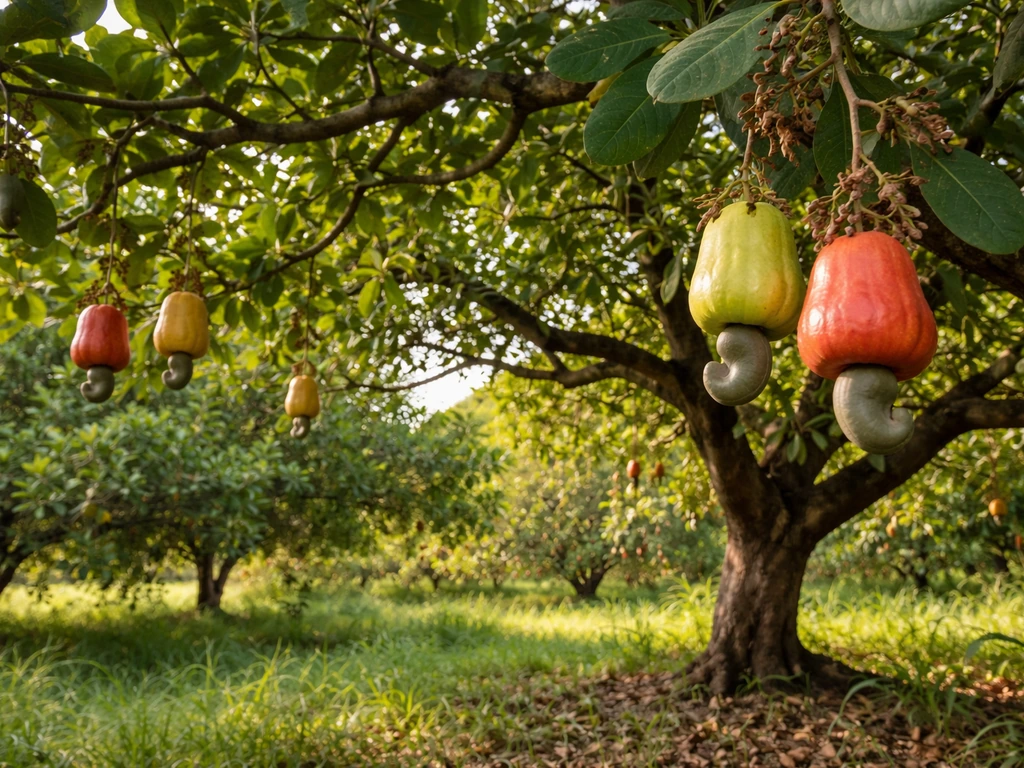
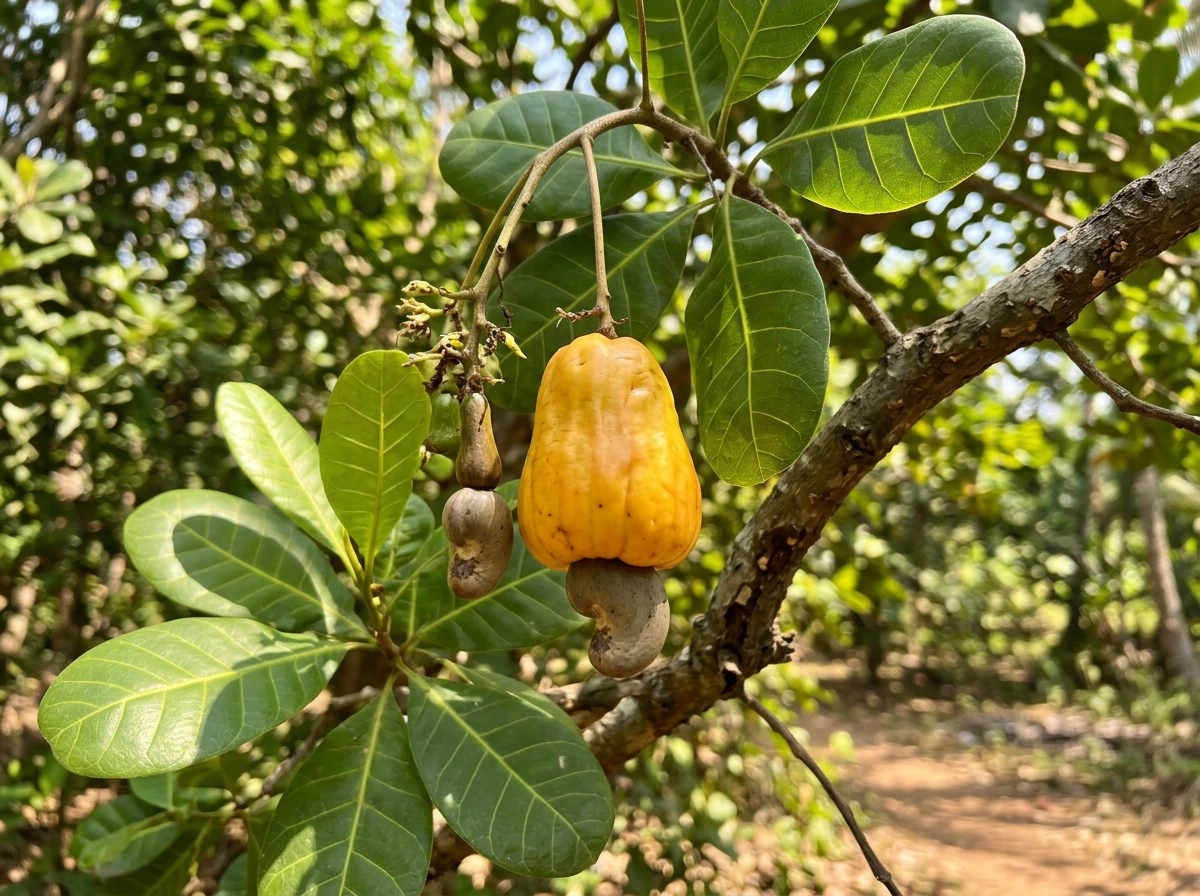
This trips a lot of people up, so let's clear it up first. The cashew nut is not a nut in the botanical sense. It is the seed (kernel) of a drupe, which is the true fruit of Anacardium occidentale. The confusing part is that the tree also produces a swollen, fleshy structure called the cashew apple, which looks like a pear or pepper and is technically an accessory fruit. The actual drupe, the kidney-shaped shell that contains the seed we eat, hangs from the bottom tip of the cashew apple. So when you look at a cashew apple on the tree, you will see the familiar curved shell dangling underneath it. The seed inside that shell is what gets roasted and sold as a cashew nut.
One more thing worth knowing: that shell is not harmless. It contains a caustic phenolic resin closely related to urushiol, the same compound in poison ivy. Shelling raw cashews without proper processing causes severe skin burns. This is why you never see truly raw, unprocessed cashews for sale, and why commercial processing is handled with heat and protective equipment. It also partly explains why small-scale home processing is genuinely difficult. If you are curious about how the full fruit develops on the tree, that is covered in more depth in our article on the cashew fruit and where it grows.
Where cashews grow naturally in the world
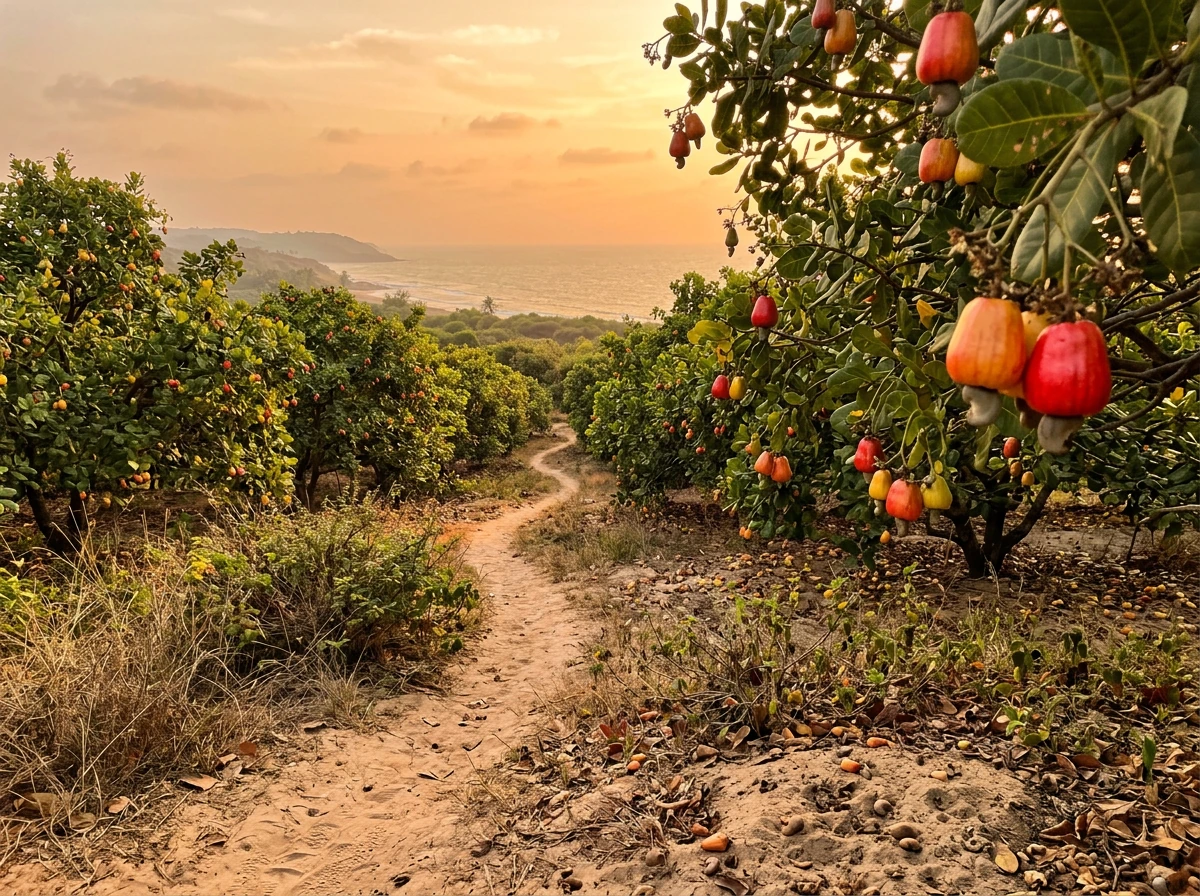
The cashew tree is native to northeastern Brazil, specifically the coastal restinga vegetation, a mosaic of sandy dunes, scrubland, and dry forest along the Atlantic coast. This origin explains a lot about what the tree needs: sandy, well-drained soil, strong sun, and a climate with a pronounced dry season. The Portuguese brought cashew to their trading ports in the 16th century, spreading it to Goa (India), coastal East Africa, and Southeast Asia. It naturalized quickly in all of those places because the tropical coastal climate was close enough to its native habitat.
Today, you can find cashew trees growing naturally or as established cultivation across a wide stretch of the tropics. The tree has essentially become pantropical. But naturalized does not mean it grows everywhere in the tropics. It still gravitates toward coastal lowlands, well-drained sandy or laterite soils, and areas with a dry season of at least a few months. In wetter, more uniformly humid climates, or at higher elevations where temperatures drop, cashews grow poorly or not at all.
Top cashew-growing countries today
- Vietnam (largest processor and exporter globally)
- India (major producer, especially in the states of Kerala, Goa, Maharashtra, and Andhra Pradesh)
- Ivory Coast (Côte d'Ivoire, the largest African producer)
- Brazil (the country of origin, still a significant producer)
- Tanzania, Mozambique, and Guinea-Bissau (important African producers)
- Indonesia and the Philippines (significant Southeast Asian production)
If you want a mental map: draw a band roughly 25 degrees north and south of the equator, then look for the coastal and lowland areas within that band that have a dry season. That is where the bulk of the world's cashews come from. We have a dedicated piece on where cashew trees grow in India if you want to go deeper on one of the most important production regions.
Where cashews grow best: the optimal regions and conditions
Growing a cashew tree and growing it well are two different things. The tree is resilient and will survive a fairly wide range of tropical conditions, but commercial-quality nut yields depend on getting a few factors right. The sweet spot for production is a tropical climate with annual rainfall between 1,000 and 2,000 mm, temperatures consistently in the mid-20s to mid-30s Celsius, and, critically, a dry spell of at least two to three months that coincides with flowering and early fruit set.
That dry season requirement is the detail most people overlook. In uniformly wet climates, cashew trees will grow lush and green but produce disappointing nut yields. Rain during flowering promotes fungal disease and poor pollination. The trees that produce the best crops are the ones that get stressed a little, go dry, flower during that dry window, and then receive rain again as the fruits develop. Northeastern Brazil and the cashew belts of India and West Africa all fit this pattern naturally.
Altitude is also a limiting factor. Cashew trees perform best below about 700 meters above sea level. Higher elevations bring cooler nights and occasional cold snaps that reduce yields and slow growth significantly. The tree is not built for cool conditions of any kind.
Climate requirements and why cashews cannot handle frost
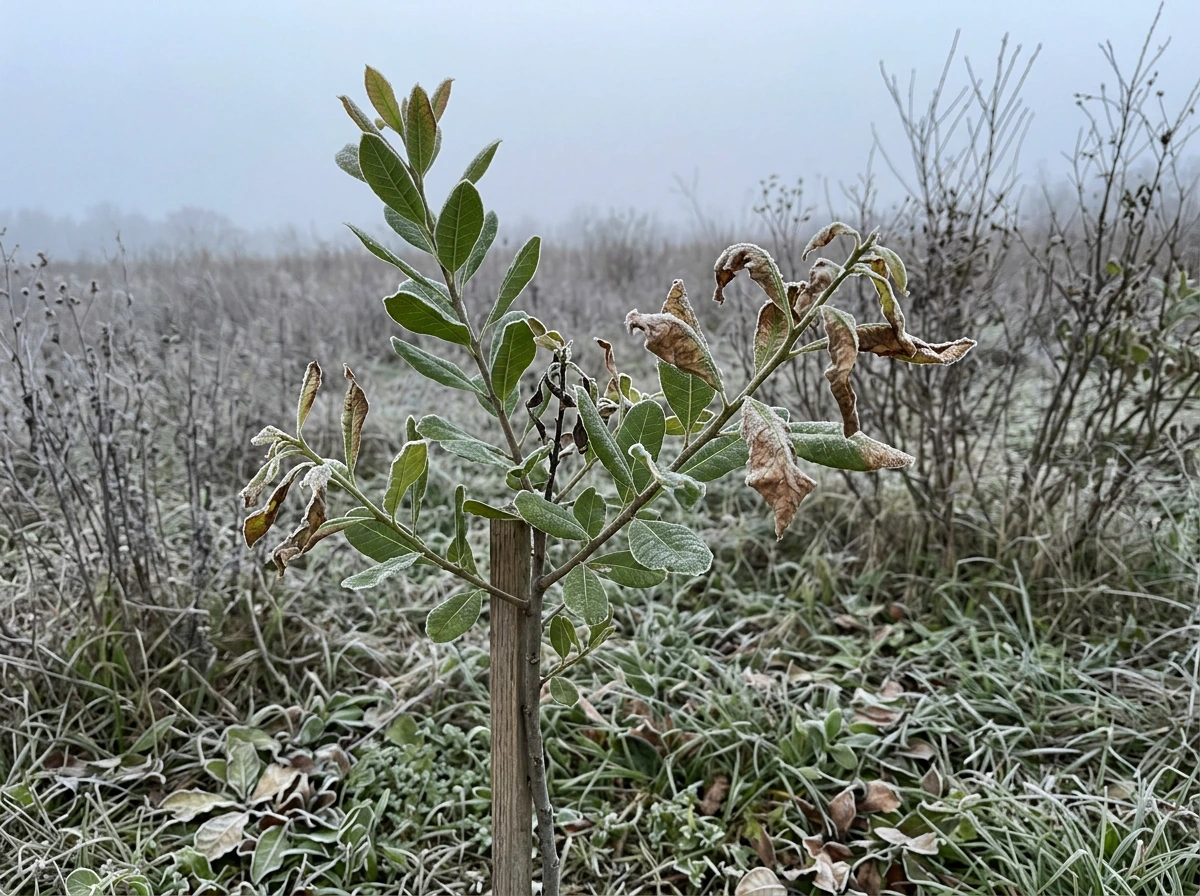
Cashew trees are genuinely frost-intolerant. Even a light frost, temperatures dipping to 0°C or just below, can damage young trees significantly and kill established ones in a bad freeze. This is not the kind of marginal frost sensitivity you see with, say, citrus, where a few hours of cold followed by warm days might leave the tree intact. A cashew tree that experiences frost damage will at minimum lose significant foliar and branch tissue, and young trees may not survive at all.
The reason comes down to the tree's origin. Coastal northeastern Brazil has no frost. Ever. The tree evolved with no need for cold hardiness mechanisms, so it developed none. Its entire physiology is calibrated for year-round warmth. This is also why attempting to grow cashew in subtropical climates at the margins, like parts of southern Florida, coastal California, or northern Australia, is possible but comes with real risk during unusual cold events. Growers in those zones often manage young trees with frost cloth or situate them against warm walls, but it is a constant management task, not a permanent solution.
| Climate Factor | Ideal Range | Why It Matters |
|---|---|---|
| Temperature | 24–35°C year-round | Below ~10°C slows growth; frost kills the tree |
| Annual Rainfall | 1,000–2,000 mm | Below 600 mm stresses the tree; above 2,000 mm risks fungal disease and poor nut set |
| Dry Season | 2–4 months during flowering | Dry period improves pollination and reduces fungal pressure at fruit set |
| Altitude | Below 700 m above sea level | Higher elevations bring cooler temperatures that reduce yields |
| Soil pH | 4.5–7.0 (slightly acidic preferred) | Tolerant of moderate acidity; struggles in waterlogged or alkaline soils |
| Frost | Zero tolerance | Even light frost causes significant damage to trees of all ages |
Waterlogging is the other climate-related killer. Cashew trees are drought-tolerant to a useful degree, but their roots rot quickly in saturated soil. A heavy clay site that holds water after tropical rainstorms is a poor choice even if the temperature is perfect. Good natural drainage is non-negotiable.
How cashew trees grow: the basic growth cycle and site setup
A cashew tree grown from seed will typically begin producing its first harvestable nuts within three to five years. Grafted trees from named varieties can produce in two to three years and usually give more consistent yields. The tree is evergreen in most conditions, meaning it holds its leaves year-round, though in climates with a pronounced dry season it may shed some foliage before the dry period and then flush new growth when it begins to flower. Flowering usually happens during or at the end of the dry season, and the fruits are ready to harvest roughly two months after flowering.
A mature cashew tree can reach 10 to 12 meters in height if left unpruned, but most managed orchards keep trees shorter to make harvesting practical. The tree spreads wide as well, with a canopy that can exceed 8 meters in diameter, so spacing matters. Commercial plantings typically allow 7 to 10 meters between trees. For a garden or small-scale setup, plan for significant space per tree and full sun exposure throughout the day. Partial shade consistently reduces yields.
Soil preparation comes down to one main goal: drainage. Sandy loam or laterite soils work very well. Heavy clay needs amendment or raised bed planting to prevent root rot. A slightly acidic soil in the pH range of 4.5 to 7.0 suits the tree well, with most successful plantings sitting between 5.5 and 6.5. The tree is not a heavy feeder compared to many fruit trees, but young trees benefit from nitrogen-rich applications during establishment.
Where you can realistically grow cashews: a practical suitability check
Before you invest in a cashew tree, run through this honest checklist. It will tell you whether your location is a go, a maybe with management, or a realistic no.
- Check your frost record. If your area has experienced any frost in the past 20 years, cashew is a high-risk crop that requires active frost protection. If frost is a regular winter feature, cashew is not a viable outdoor tree for your location.
- Check your average annual temperature. If your year-round average sits below about 20°C, the tree will survive marginally but will not produce well. Cashew wants consistent warmth, not just warm summers.
- Check your rainfall pattern, not just your total. 1,200 mm spread evenly across 12 months is actually less ideal than 1,500 mm concentrated in 8 months with a 4-month dry season. You want the dry gap during flowering season.
- Check your soil drainage. A simple test: dig a 30 cm hole, fill it with water, and see how long it takes to drain. If it is still holding water after several hours, you have a drainage problem that needs solving before you plant.
- Check your altitude. If you are above 700 m, expect reduced and less reliable production. Above 1,000 m, cashew is generally not worth attempting in the ground.
- Check your USDA hardiness zone or equivalent. Cashew is reliably suited only to Zone 11 and above. Zone 10b is marginal and requires favorable microclimate conditions (coastal, sheltered, urban heat).
In the United States specifically, outdoor cashew cultivation in the ground is really only viable in southernmost Florida, parts of Hawaii, and protected coastal pockets of Puerto Rico. We cover this in much more detail in our piece on where cashew trees grow in the US. For Australia, the northern tropical regions of Queensland and the Northern Territory are the practical growing zones. We have a separate article on where cashews grow in Australia if you are working in that context.
How to read a cashew climate map and actually use the information
A lot of people search for a cashew growing map hoping it will just show them a colored zone they can match to their address. The honest answer is that cashew suitability maps are useful as a first filter, not a final answer. The global distribution maps published by agriculture agencies generally shade the tropical belt between roughly 25°N and 25°S, with more detailed shading for altitude, rainfall, and dry-season patterns within that band. If your location falls clearly inside that band and below 700 m, you are in the right territory. If you are at the margins, the map alone will not tell you whether a specific microclimate on your property is viable.
The more useful approach is to look up the growing conditions of areas where cashew is already successfully produced and compare them to your own local climate data. Find the nearest weather station that records your area, pull 10 to 20 years of monthly temperature and rainfall averages, and compare them to the optimal range in the table above. If your monthly minimums never drop below 15°C, your rainfall fits the 1,000 to 2,000 mm range, and you have a two-to-four month window with noticeably less rainfall, you are in a promising position. If your numbers consistently fall outside those ranges, you have your answer.
For growers at the edge of viability, the most practical step is to look for a microclimate advantage: a south-facing (in the southern hemisphere, north-facing) slope that holds heat, a sheltered position against a masonry wall, or a coastal location where sea temperatures moderate overnight lows. These microclimate factors can shift effective conditions by two to four degrees Celsius, which is often the difference between a struggling tree and a productive one. The soil side of the equation, specifically drainage, is usually easier to fix through site preparation than the temperature side, so focus your energy there if your climate is otherwise suitable.
FAQ
Do cashew trees need to grow near the equator, or can they grow farther north or south?
They mainly do best in the tropical belt, roughly 25°N to 25°S, but being outside that band does not automatically rule them out. The real deciding factors are consistently warm nights (avoid cold snaps and frosts) plus a true dry season during flowering, so use local temperature minimums and rainfall pattern, not latitude alone.
If my area is frost-free but very humid year-round, can I still grow cashews?
You can often get healthy growth in uniformly humid climates, but yields usually drop because flowering and early fruit set suffer. Rain during flowering increases disease risk and interferes with pollination, so you will need either a location that naturally dries out (windward vs. leeward effects) or a managed dry-period strategy.
How much dry season is enough for cashew production?
Aim for a dry window of at least two to three months, specifically overlapping flowering and early fruit set. If your “dry season” is only a modest reduction in rainfall, the trees may still flower, but nut quality and quantity often disappoint compared with regions that have a clearer rain break.
Can cashew trees handle clay soil if I water less?
Reducing watering helps, but it does not fix waterlogging, roots rot quickly when soil stays saturated after storms. If you have heavy clay, raised beds or deep drainage improvements are usually required to keep the root zone from staying wet.
What’s the practical difference between “growing naturally” and “growing well”?
Naturalized presence means the tree can survive, it does not guarantee good yields. Commercial-quality production depends on the climate matching the tree’s dry-season flowering needs and avoiding cold, so look for both rainfall seasonality and low-risk temperatures, not just whether trees exist nearby.
Are cashew trees tolerant of occasional light frost if I protect them?
Even light frost can damage young trees and severely reduce yields, and protection usually needs to be consistent during cold events. Temporary frost cloth can help on a small scale, but it is not a reliable substitute for a site that rarely dips near 0°C.
Why do some cashew trees flower but produce few nuts?
Common causes are rain timing (flowering occurring during wet conditions), poor drainage stress from waterlogging, or insufficient full sun. Another frequent issue is that seed-grown trees may take longer to bear and can be less consistent than grafted varieties.
How close does cashew planting spacing need to be for home or orchard use?
Cashews have wide canopies, often exceeding 8 m, so crowding reduces light and can cut yields. Use full-sun spacing (often around 7 to 10 m in managed plantings), and avoid dense hedgerows even if you have the land.
If I want cashews in a marginal climate, what should I try to change first?
Temperature margins are hardest to fix, drainage is usually more adjustable. If your site is near the frost line or at higher elevation, prioritize a microclimate advantage like a sheltered, heat-retaining position, and treat drainage improvements as your first “controllable” lever.
Do cashews grow from seed reliably, or should I seek grafted trees?
Seed can work and will produce, but it typically takes longer to reach harvestable nuts (often 3 to 5 years) and results may vary. If you want more predictable timing and yields, grafted trees from named varieties are generally the better choice.
When should I expect harvest after flowering?
Fruits are usually ready about two months after flowering. In climates with a clear dry-to-wet transition, the flowering window tends to be more synchronized, which makes harvest timing easier to plan.