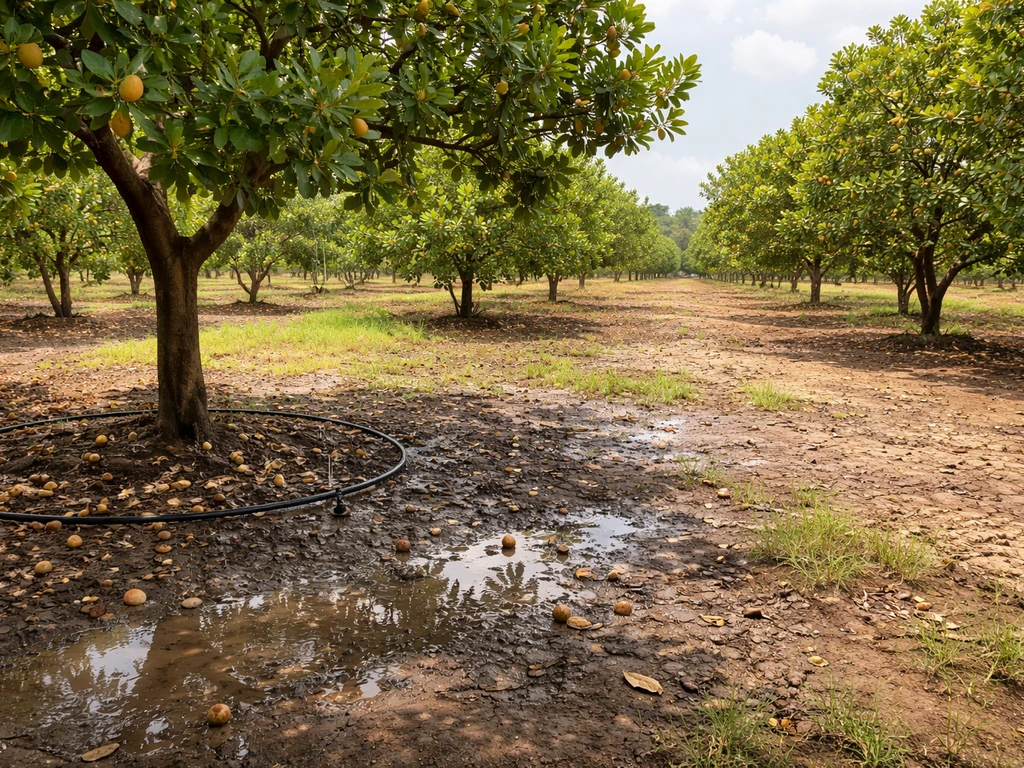
Quick answer: yes, cashews grow on trees, not underground
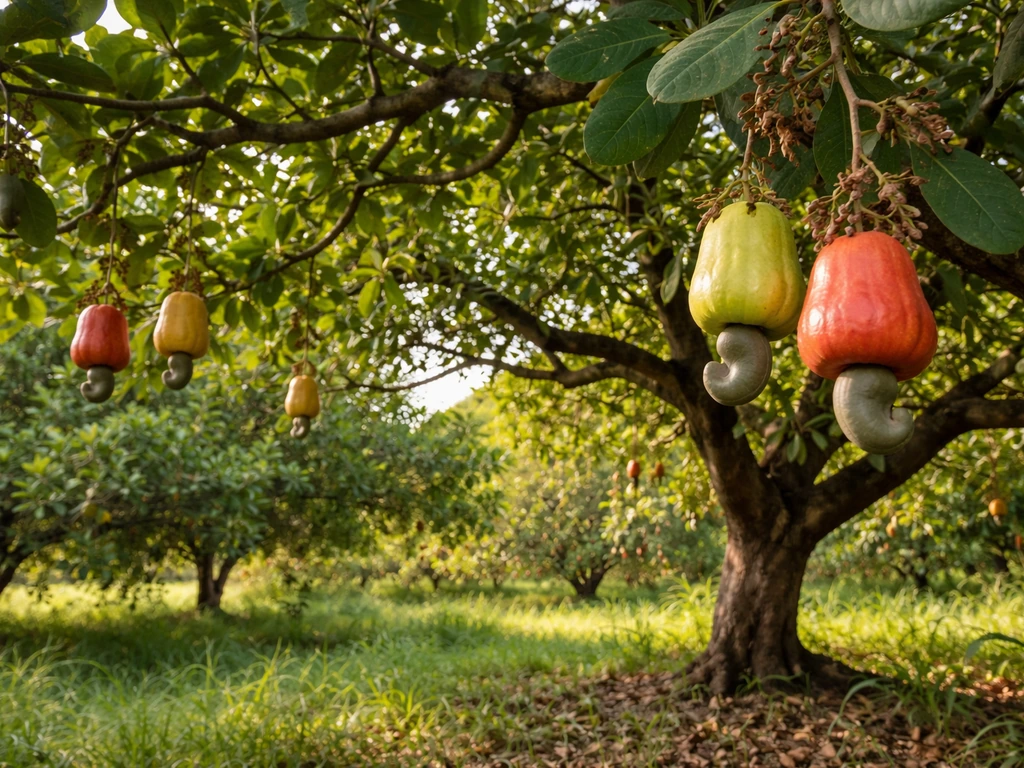
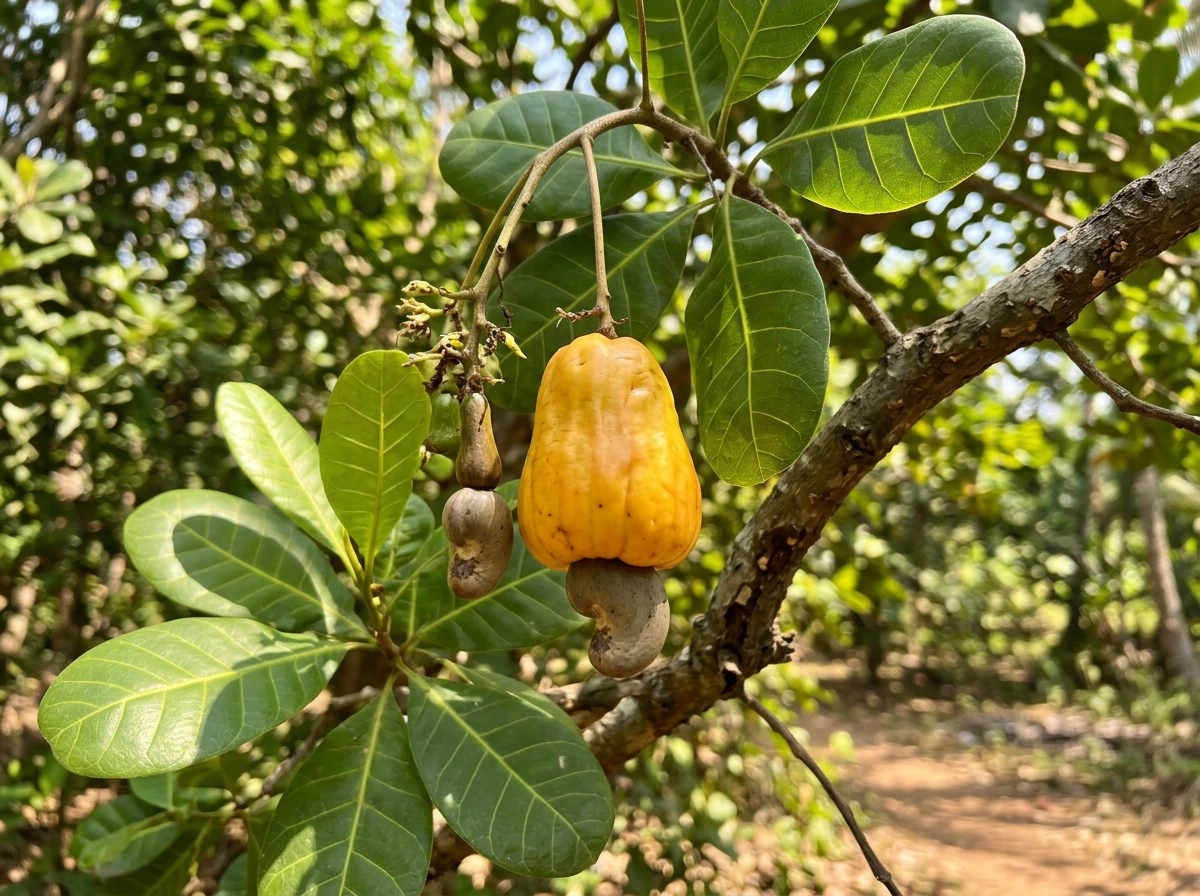
Cashews grow on a tropical evergreen tree called Anacardium occidentale. The nut develops above ground, attached to the outside of a fleshy fruit called the cashew apple. Nothing about cashew production happens underground. If you've seen photos of the swollen, pear-shaped cashew apple with a little curved shell dangling from its base, that shell is the cashew nut, and it's sitting in full sunlight up in the tree canopy. The confusion mostly comes from mixing cashews up with peanuts, which do grow underground, and we'll get into that in a moment.
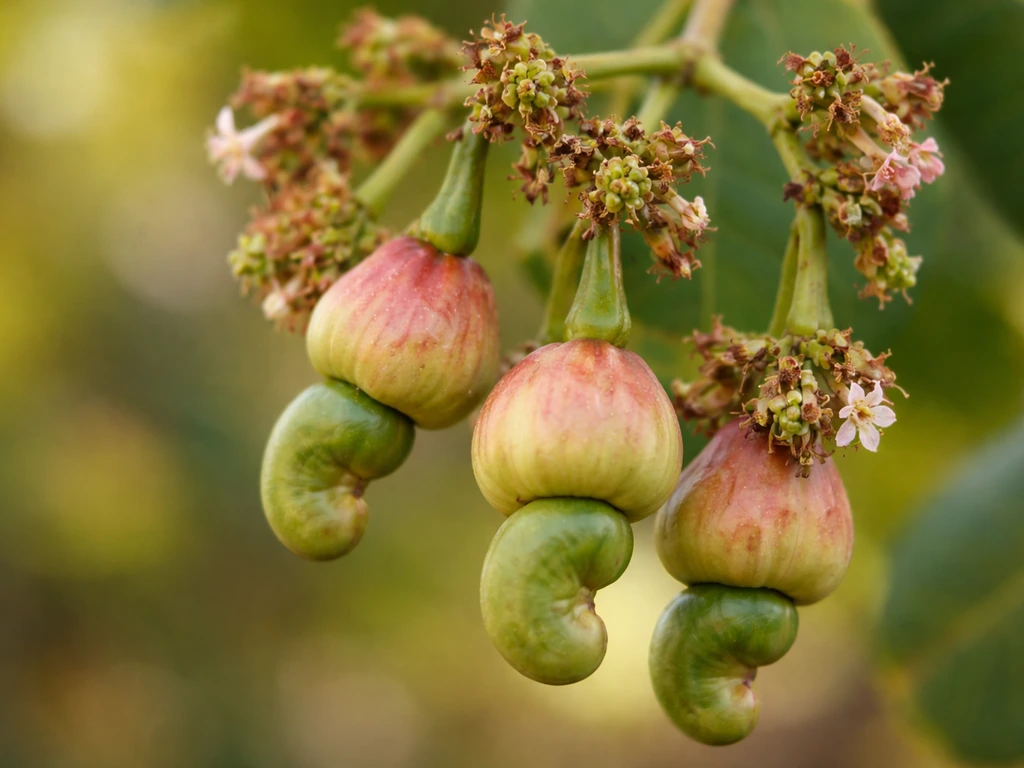
The whole structure is a bit unusual, which is probably why so many people get it wrong. When a cashew tree flowers and pollination occurs, the fertilized ovule develops into the true botanical seed, which is what eventually becomes the kernel you eat. At the same time, the flower stalk (called the peduncle or receptacle) doesn't just wither away. Instead, it swells up dramatically, turning into the soft, juicy cashew apple, which grows to about 2 to 4 inches long and turns yellow or red when ripe.
So the cashew apple is actually the false fruit, a fleshy accessory structure that develops from the flower stalk tissue rather than from the ovary wall. Botanists call it an accessory fruit or pseudofruit (technically a hypocarpium). The true fruit is the hard, kidney-shaped shell that hangs from the bottom tip of the cashew apple. That shell contains the single seed: the cashew kernel.
In practical terms, when the cashew apple is fully ripe and falls from the tree, the shell-and-kernel unit comes with it, still attached to the base of the apple. The whole thing develops and matures up in the tree, completely above ground.
What's inside that shell (and why it matters)
The cashew shell is not just a hard casing. It contains a thick, caustic oil called cashew nut shell liquid (CNSL), which is dominated by anacardic acid, a phenolic compound that causes severe contact dermatitis if it touches your skin. This is why you never see raw cashews sold in the shell at grocery stores. Processing requires careful heating or roasting to neutralize the shell oil before the kernel can be safely handled, and workers in processing facilities need protective equipment. It's a step that adds significant cost and complexity to cashew production compared to, say, almonds or walnuts.
The edible kernel itself sits inside this caustic shell, protected until processing. Once the shell oil is neutralized and the shell is cracked open, you get the pale, comma-shaped kernel that's sold as a cashew nut. Calling it a nut is technically a stretch botanically (it's a seed inside a drupe-like structure), but for everyday purposes, the term sticks.
The tree's growth habit: canopy, not underground
A mature cashew tree is a spreading, medium-sized evergreen that can reach 10 to 12 meters in height, though many commercial varieties are kept shorter for easier harvesting. If you're also wondering where do shea nuts grow, note that shea is a different species with its own native range. It has a wide, dense canopy and produces fruit near the outer edges of its branches, where sunlight reaches. The tree is perennial and keeps its leaves year-round, which makes it look lush and well-suited to tropical landscapes. There is no stage of cashew development that involves the fruit or seed going into the ground, see where does cashew nuts grow for a clear explanation of how cashews grow. The question “cashew fruit where does it grow” is answered by the fact that the cashew apple and nut both develop in the tree canopy, not underground. The roots are below soil as with any tree, but the fruiting structures are entirely above ground.
Some early-stage cashew seedlings can look shrubby before the main trunk establishes itself, and this likely contributes to the occasional misconception that cashew is a bush crop. It is not. In commercial production across India, Brazil, Vietnam, and elsewhere, cashew is grown as an orchard tree in full tropical plantations, not as a low-growing shrub.
Cashew vs peanut: clearing up the underground confusion
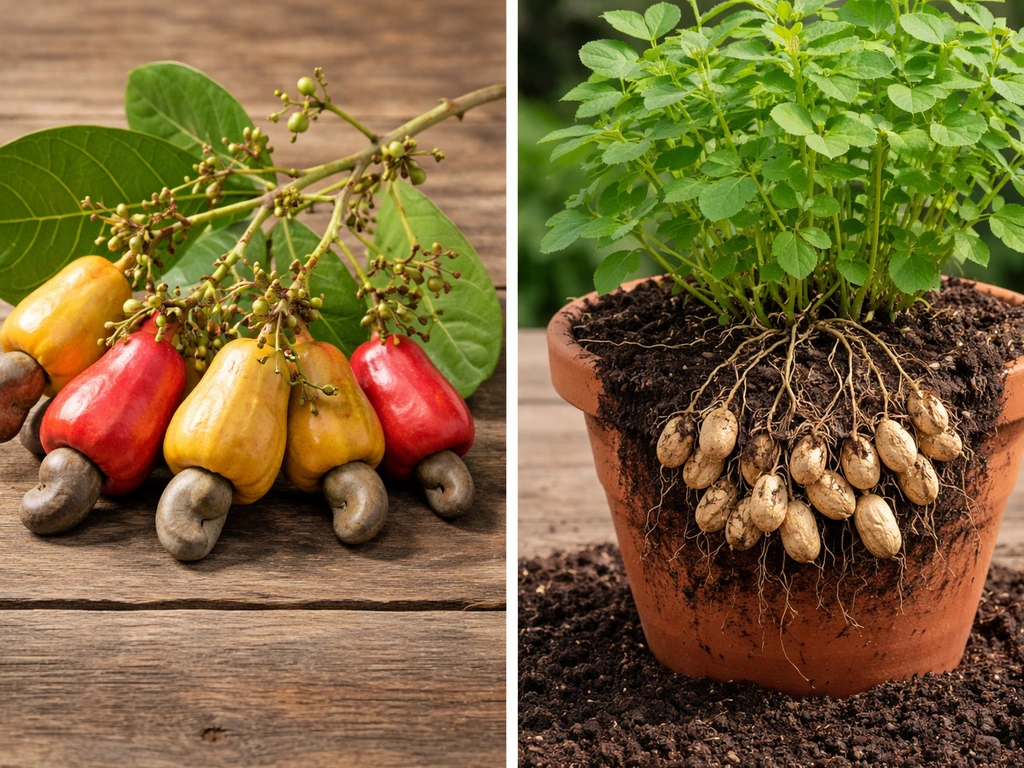
The most common source of confusion is the peanut comparison. Peanuts (Arachis hypogaea) are genuinely geocarpic, meaning their pods develop underground. After a peanut flower is fertilized, a structure called a peg grows downward and physically penetrates the soil, where the pod then forms and matures below the surface. That's a completely different biological process from anything cashew does.
Cashews share nothing with that process. They are tree crops. The nut shell develops at the tip of an above-ground fruit structure in the open air. If you searched for cashews because you'd heard they grow underground like peanuts, that information is simply wrong. Here's a quick side-by-side comparison:
| Feature | Cashew | Peanut |
|---|
| Plant type | Tropical evergreen tree | Annual herbaceous legume |
| Fruiting location | Above ground, on tree canopy | Underground (geocarpic) |
| Fruit structure | Kernel inside shell, attached to fleshy apple on tree | Pod with seeds inside, formed below soil |
| Shell hazard | Contains caustic CNSL oil; must be processed | No caustic oil; shell is edible/safe |
| Climate requirement | Frost-free tropics only | Warm temperate to tropical |
| Commercial form | Orchard tree crop | Row crop / field crop |
Tree or bush? Addressing another common misconception
Occasionally people wonder whether cashew is more of a bush than a tree, possibly because the plants they've seen in photos or home gardens look compact and branchy. Botanically and commercially, cashew is classified as a tree. Young trees under two or three years old can appear low and spreading, but that's just the juvenile growth phase. Once established, the main trunk and canopy architecture of Anacardium occidentale are unmistakably tree-like. Commercial plantations treat it exactly like other tropical orchard trees, spacing plants to allow canopy development and managing them over a productive life of 20 to 25 years or more.
There are some dwarf cashew varieties developed for easier management that stay shorter and more compact, but even those are described as small trees, not bushes. No cashew variety produces its fruit at or below ground level.
Where cashews grow best, and what they need
Cashew is strictly a tropical crop. If you’re wondering where do soap nuts grow, it’s useful to know that cold is a hard limit for soap-nut cultivation too, cold can be a setback, so you need a frost-free climate year-round. The FAO is direct about this: cold is a hard limit for cashew cultivation, not just a setback. If you're planning to grow one, you need a frost-free climate year-round. In the continental United States, that realistically means the link_text. where do cashew trees grow in the us If you're curious about what US regions specifically support cashew cultivation, that's a topic worth digging into separately.
Outside the US, the world's major cashew-growing regions are concentrated in a belt running through tropical Africa, South and Southeast Asia, and South America. India is one of the largest producers, with major cultivation in states like Maharashtra, Odisha, Tamil Nadu, Karnataka, Kerala, and Andhra Pradesh. In Australia, viable cashew production is generally limited to areas north of around 17 degrees south latitude, where frost risk is essentially zero.
For anyone planning to grow cashew, here are the core environmental requirements to check against your region:
- Temperature: an ideal range of roughly 20 to 30 degrees Celsius; prolonged temperatures below that threshold significantly reduce performance
- Frost tolerance: none whatsoever; even a single light frost can damage or kill cashew trees
- Rainfall: optimum production generally falls in the 800 to 1,500 mm annual range, with a dry season that helps synchronize flowering
- Soil pH: slightly acidic to neutral, roughly 6.0 to 7.0, performs best
- Soil type: cashew is actually quite tolerant of poor, sandy, or lateritic soils, which is one of its genuine advantages as a crop in marginal tropical land
- Drainage: good drainage is important; cashew does not tolerate waterlogged conditions even though it can handle drought
One thing cashew has going for it as a tree crop is its drought tolerance. It can grow in areas where rainfall is lower than ideal and soils are nutrient-poor. That's part of why it's so widely grown across coastal tropical regions in Africa and Asia where more demanding crops would struggle. cashew nuts grow in which soil But the frost sensitivity is non-negotiable, and that single constraint rules out the vast majority of temperate growing zones.
Practical next steps if you're thinking about growing cashew
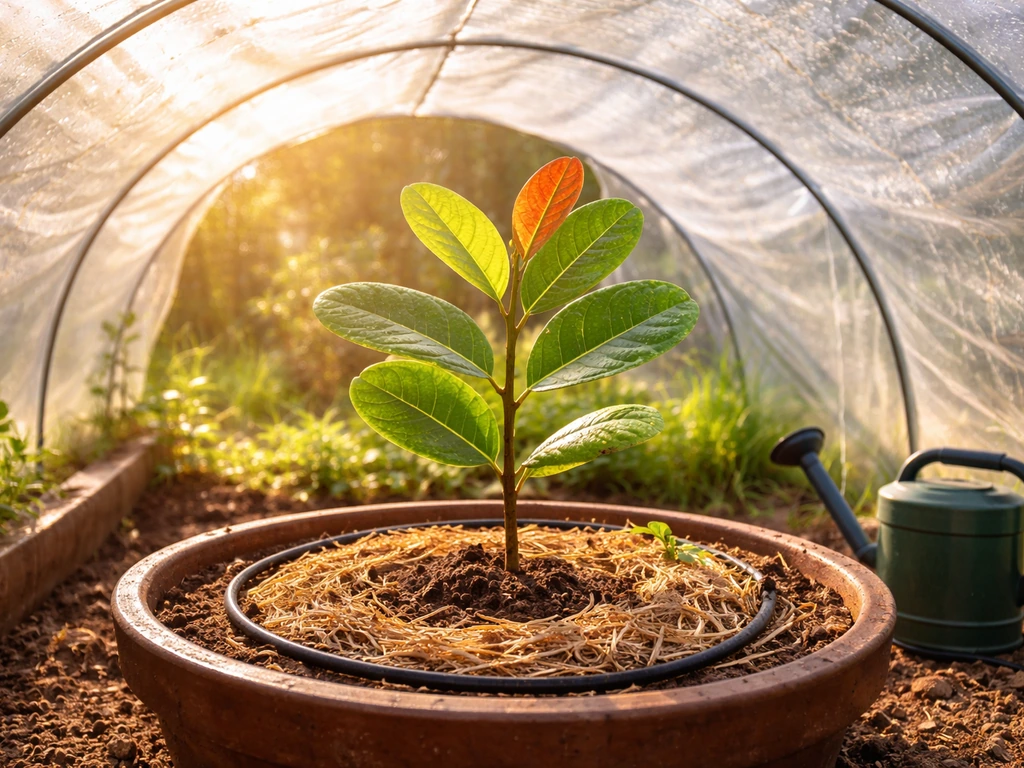
If you're in a genuinely tropical climate (USDA hardiness zone 10b or warmer, with no frost), cashew is a realistic option. It's not a beginner's tree in the sense that harvest and processing are more involved than most nut trees, but the tree itself is relatively undemanding once established. If you're outside the tropics, growing cashew outdoors long-term simply isn't viable. A container-grown specimen in a warm greenhouse can work as a novelty, but you won't get meaningful nut production that way.
For region-specific guidance, it's worth looking at detailed articles on For region-specific guidance, it's worth looking at detailed articles on where cashew trees grow in the US, cashew cultivation in India, and cashew growing in Australia, all of which cover local variety selection, rainfall patterns, and planting timelines in more depth., all of which cover local variety selection, rainfall patterns, and planting timelines in more depth. Understanding the cashew fruit itself, including the cashew apple and how the nut attaches to it, also helps you plan harvest timing and understand what to expect from a fruiting tree. The biology is genuinely interesting once you see it in context.